
A prayer plan in AngelGuard
14 Nights of Love
1 Corinthians 13, a few words a night, with Sarah and Tobit
What it is
Saint Paul's chapter on love is often read at weddings, but he wrote it to a quarreling church in Corinth. These fourteen nights walk through it a few words at a time, from “If I speak with the tongues of men and of angels” to “the greatest of these is charity”.
Beside Paul runs an older story of two households: Sarah, praying in tears in an upper room, and blind Tobit far away in Nineveh, praying the same day. The Book of Tobit says both prayers reached God at one time, and He sent the angel Raphael “to heal them both”. Each night is a reflection, one small thing to do tonight and tomorrow, and a prayer.
The fourteen nights
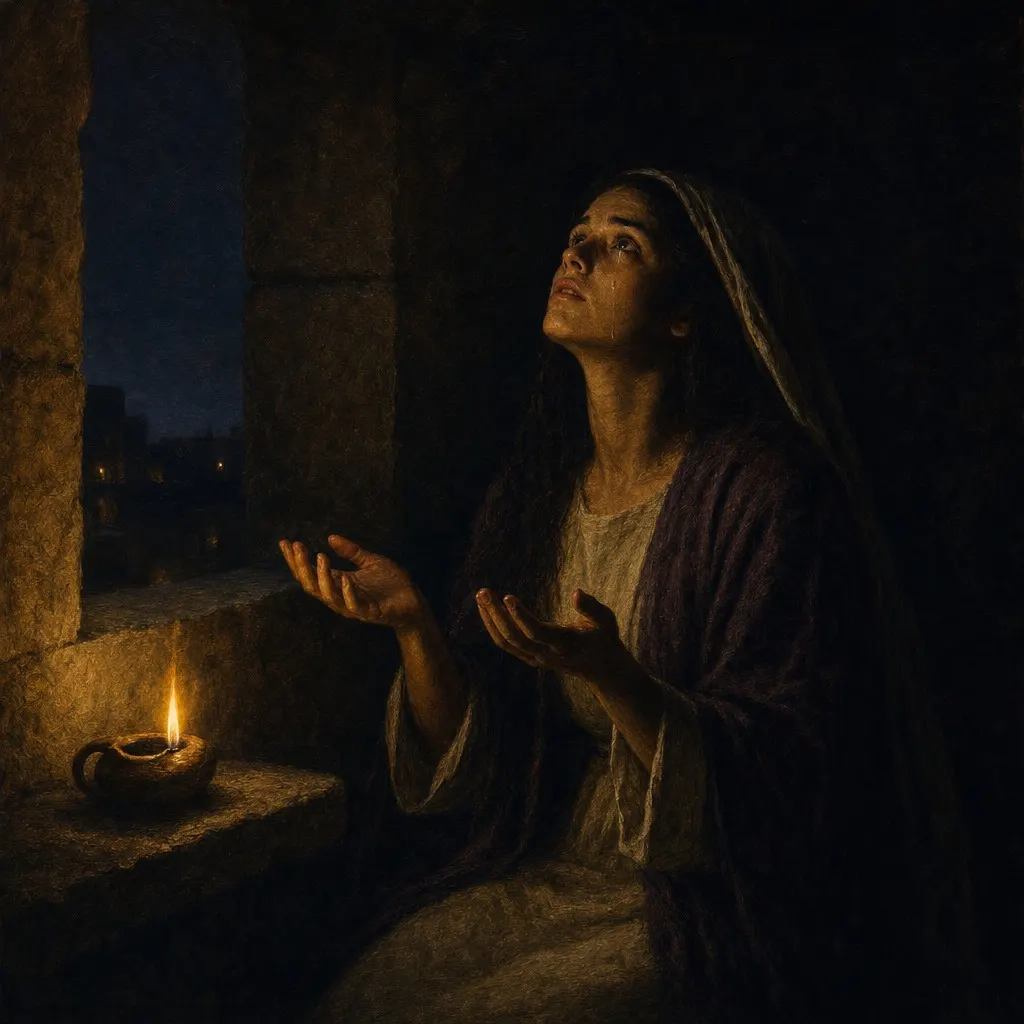
Sarah's room · Nights 1–3
- 1Tongues of Angels1 Corinthians 13:1
- 2More Than Mountains1 Corinthians 13:2
- 3If I Give It All1 Corinthians 13:3
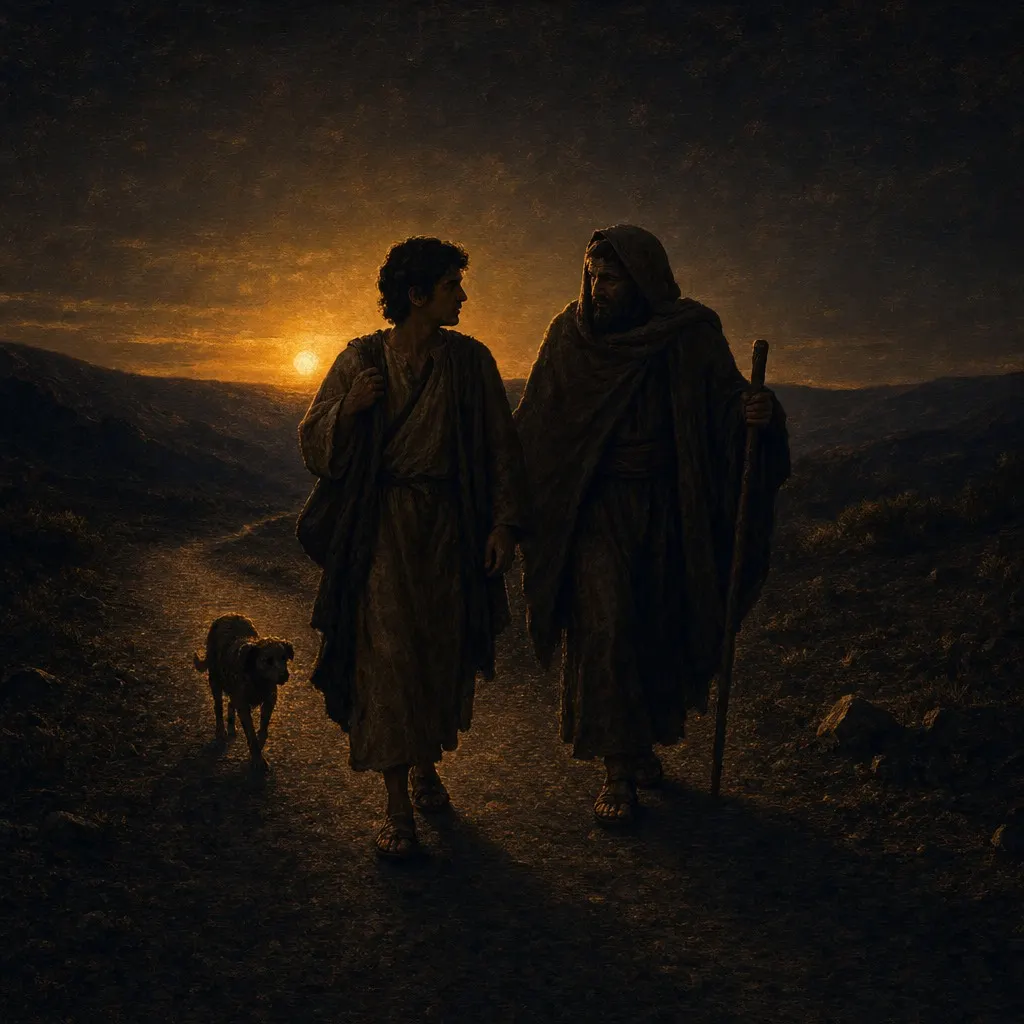
The road · Nights 4–7
- 4Patient1 Corinthians 13:4
- 5Kind1 Corinthians 13:4
- 6What Envy Kills1 Corinthians 13:4
- 7Not for Myself1 Corinthians 13:4–5
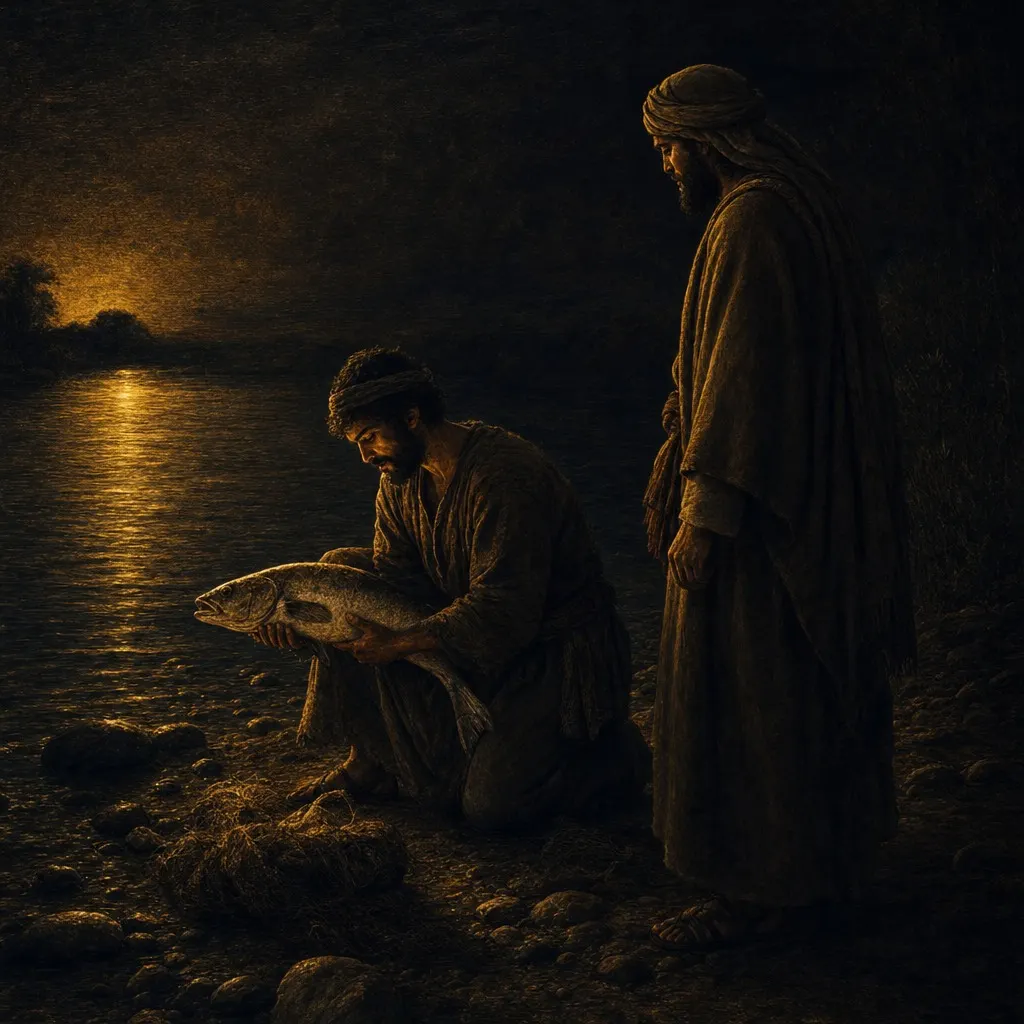
The river · Nights 8–10
- 8No Ledger1 Corinthians 13:5
- 9The Truth at the Table1 Corinthians 13:6
- 10Beareth All Things1 Corinthians 13:7
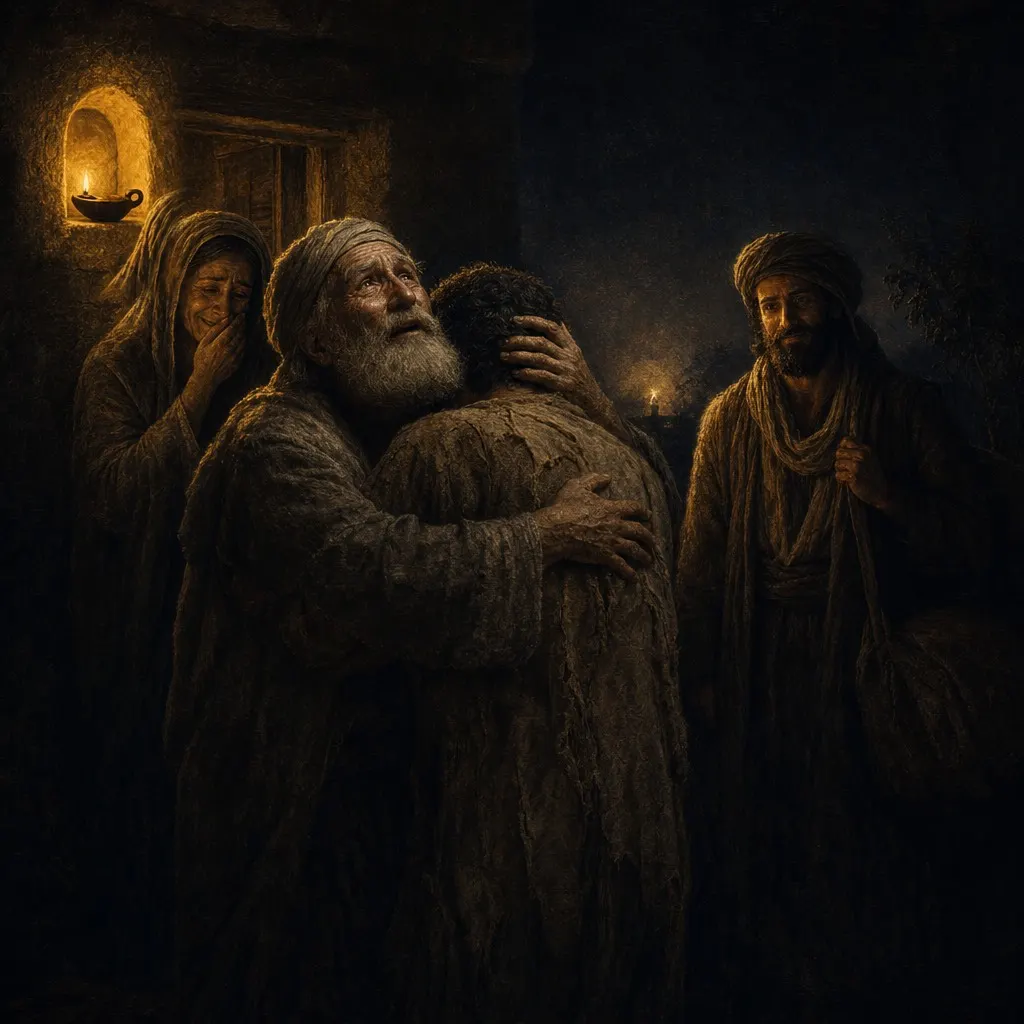
Home · Nights 11–14
- 11Love Never Fails1 Corinthians 13:8
- 12Only in Part1 Corinthians 13:9–10
- 13Face to Face1 Corinthians 13:11–12
- 14The Greatest of These1 Corinthians 13:13
Night one, to read now
If I speak with the tongues of men and of angels, and have not charity, I am become as sounding brass, or a tinkling cymbal.
In an upper room, in the land of the Medes, a young woman named Sarah has not eaten or drunk for three days. She is praying, with tears. Seven times she has been given in marriage, and seven times her husband has died on the wedding night.
Think of one voice you would know anywhere. Someone calling your name from the next room. A child on the stairs. A parent on the phone, saying the same thing they always say. Or a voice you have not heard in a long time, and would give a great deal to hear again. Let it come.
Lord God, You heard Sarah in her upper room and Tobit in his dark house, both at one time, and You sent help to them both. Hear me too, as much as I can say it tonight. Without love, my words are only noise. St Raphael, sent by God to heal, pray for the ones I carry. Put Your love under every word I say at home, through Christ our Lord. Amen.
Every night ends with half a line that Sarah once prayed. The other half waits for the last night.
Have mercy on us, O Lord, have mercy on us.
How it works
- Listen: each night is narrated, about ten minutes, and the words follow along on screen.
- One night at a time: a reflection, one small thing for tonight and tomorrow, and a prayer.
- Night one is free: hear it before you decide.
Questions
What is 1 Corinthians 13?
Chapter 13 of Saint Paul's First Letter to the Corinthians, his description of love: patient, kind, not envious, not proud, bearing and hoping all things, and never failing. The old translations say charity, from the Latin caritas: God's own love, given to us, and lived out toward God and our neighbor.
Why Tobit?
The Book of Tobit, part of the Catholic Old Testament, tells of two households in trouble on the same day, Sarah's and Tobit's, and of how God answered both. Its story runs beside Paul's words, night by night, until the two households meet.
Is it for couples?
For couples, yes, and for far more than couples. It is for anyone who has someone to love or to carry in prayer: a spouse, a child, a parent, a friend, someone far away, someone who has died. Night one says to everyone listening: “You may have come to this chapter because a marriage needs it. Or because you live alone, and someone far away is still on your heart every night. Or because someone you love has gone ahead of you, and the house is too quiet. Whoever you are carrying tonight, you are in the right place.” Later nights speak to a marriage in a long winter, to caring for someone who is sick, and to losing the one you hoped to grow old with. The plan does not promise to fix a marriage or anyone in it. It gives you about ten quiet minutes a night to bring them to God.
Which Bible text is used?
The Scripture card shows two versions: the Douay-Rheims, the traditional Catholic translation, whose words each night prays, and the World English Bible, Catholic Edition, in plainer modern English.
Guided narration · How it’s made