Novena
The St. Andrew Christmas Novena
One short prayer to God for the hour Christ was born, said fifteen times each day from St. Andrew’s feast, November 30, until Christmas Eve.
Pray the St. Andrew novena prayer ›
St. Andrew’s Christmas novena is one short prayer to God, said fifteen times a day for twenty-five days, from his feast on November 30 until Christmas Eve. Say the fifteen together or spread them through the day. This AngelGuard page gives the full prayer, a way to hear it read aloud, and what to do after a missed day.
Quick facts
- Prayed to:
- God
- Feast day:
- November 30, the feast of St. Andrew
- When to pray:
- From November 30, the feast of St. Andrew, through to Christmas Eve on December 24.
- Prayed for:
- A particular intention brought to the coming of Christ at Christmas.
The St. Andrew Christmas novena prayer
This is the prayer in the wording EWTN prints. It is said fifteen times a day, and your intention is named once in each, at the place marked. To pray it with a voice beside you, listen to it read aloud, with a short spoken introduction.
Hail and blessed be the hour and moment
in which the Son of God was born
of the most pure Virgin Mary,
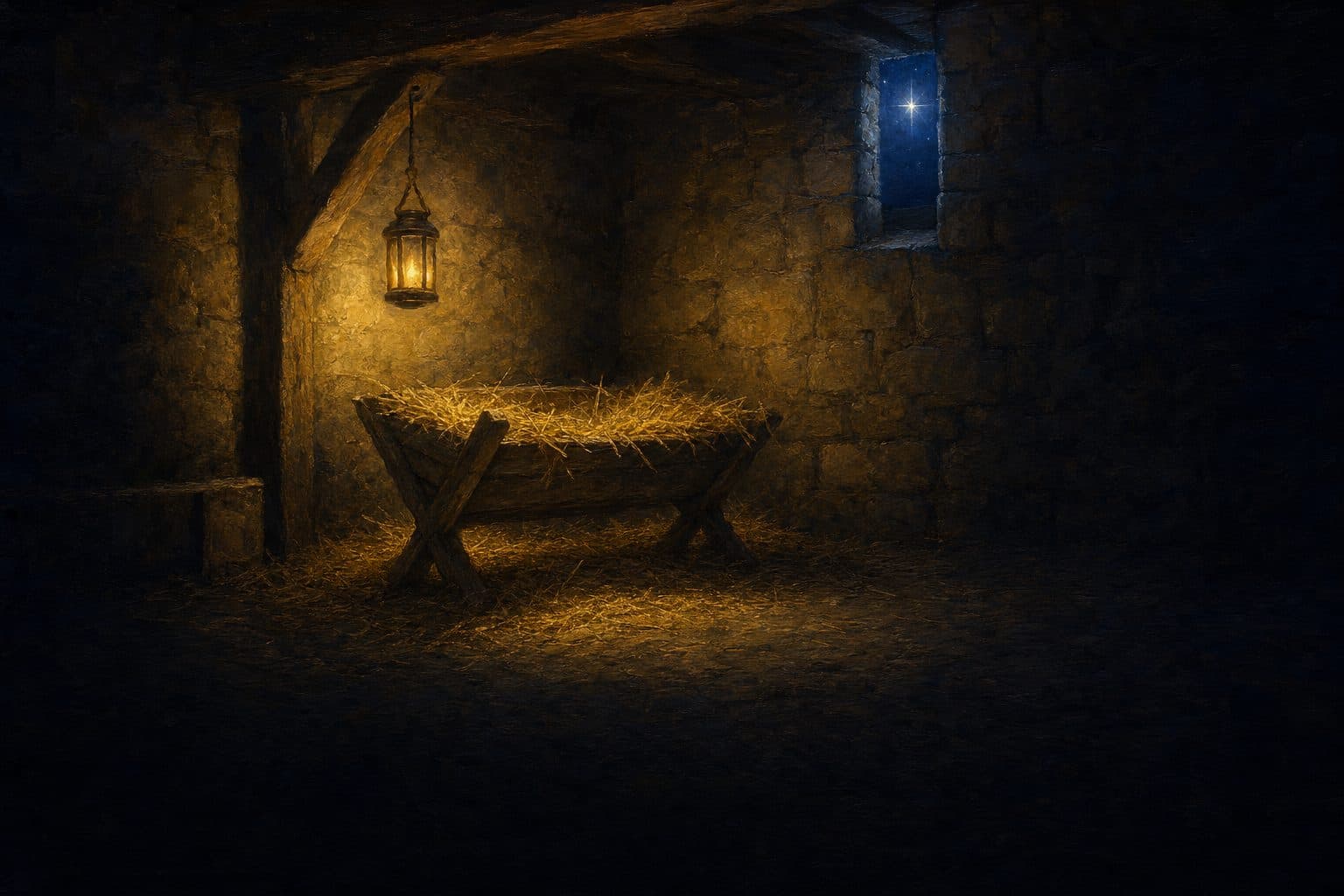
at midnight, in Bethlehem, in the piercing cold.
In that hour vouchsafe, I beseech Thee, O my God,
to hear my prayer and grant my desires,
(here mention your request)
through the merits of Our Saviour Jesus Christ,
and of His blessed Mother.
Amen.
Two other wordings are in circulation and both are fine. Catholic Culture prints the same prayer without “I beseech Thee”, as some old holy cards do; the 1897-imprimatur card transcribed by the Dominican nuns of Summit, New Jersey, has it. The Diocese of Brooklyn uses a slightly different translation that adds “in a stable” and ends “Through Jesus Christ and His most Blessed Mother.” Pick one and keep it for all twenty-five days.
When to pray it: November 30 to Christmas
Begin on November 30, the feast of St. Andrew the Apostle, and keep going every day until Christmas. Most sources, including the Diocese of Little Rock, give the last day as December 24, Christmas Eve; EWTN and the old cards simply say “until Christmas”. Either way it is about twenty-five days, which makes it the longest of the well-known novenas and the only one measured by Advent rather than by nine. If you would like nine days as well, the Christmas novena runs from December 16 to Christmas Eve, and the two can be kept together.
St. Andrew’s feast sits at the very start of Advent. The First Sunday of Advent is the Sunday nearest to November 30, so in some years the novena begins a day or two before Advent and in others a few days into it. It makes no difference: the novena follows the date, not the Sunday.
Fifteen times a day, without it taking over the day. The prayer takes about twenty seconds, so fifteen is five minutes at most. What most people do:
- Five in the morning, five at midday, five at night.
- Count on rosary beads: one decade is ten, and five more gets you there.
- Tie them to things you already do: the kettle, the car, the walk to the school gate.
- Pray it as a family after the evening meal, a few each, until the fifteen are done.
If you miss some, or a whole day, carry on. The count is a way of keeping the prayer in front of you through a busy month, not a test you can fail.
Who wrote the St. Andrew Christmas novena?
Nobody knows, and it is better to say so than to repeat a story. You will read that it was written by an Irish nun in 1897. No source we could find names her, her community, or a document, and the careful sources do not claim it either: the Diocese of Little Rock says its “origins … are unknown” though it “is believed to have come from Ireland”, and the Dominican nuns of Summit, New Jersey, say the same.
The one fixed date is 1897. The holy cards that spread the prayer carry an imprimatur from the Archbishop of New York dated February 6, 1897. That was Archbishop Corrigan, who led the archdiocese from 1885 to 1902. An imprimatur is a bishop’s statement that a text contains nothing against faith or morals; it tells you the prayer was being printed in New York by then, not who composed it or where.
So the honest summary is: an anonymous Advent prayer, probably Irish in origin, approved for printing in New York in 1897, and prayed ever since.
Why is it called the St. Andrew novena if it is not a prayer to him?
Because it starts on his day. The prayer never mentions him: it is addressed to “my God” and dwells on the hour of Christ’s birth. ChristmasNovena.com, the site most associated with it, puts it plainly: the novena “is actually directed toward God Himself.”
St. Andrew is still a fitting door into Advent. He is the first person in John’s Gospel to go and fetch someone else for Christ: “He first found his own brother, Simon, and said to him, ‘We have found the Messiah!’ … He brought him to Jesus” (John 1:41–42). A novena that runs to Christmas, begun on the day of the apostle who brought his brother to the Messiah, is a good time to pray for someone you would like to bring as well.
If you want a prayer to St. Andrew himself, ask his intercession in your own words; he is the patron of fishermen and of Scotland. The novena, though, is to God.
The prayer line by line
- “Hail and blessed be the hour and moment” is a greeting to a moment in time, the way the Angelus greets the Annunciation. The whole prayer stands at one instant, the birth, and asks from there.
- “Of the most pure Virgin Mary” is the Church’s faith in the virginal conception and birth of Christ (Luke 1:34–35; Matthew 1:23).
- “At midnight, in Bethlehem, in the piercing cold” is devotion, not Scripture. The Gospel says only that it was night, with “shepherds … keeping watch by night over their flock” (Luke 2:8), and the prophet names Bethlehem (Micah 5:2). The midnight hour comes from the tradition of the Christmas Mass at night, and the cold from the imagination of a Northern Hemisphere winter. Both are there to make you picture it, and they work.
- “In that hour vouchsafe … to hear my prayer and grant my desires”: “vouchsafe” means “graciously grant”. The request is placed inside the moment God gave the world his Son, which is the boldest reason there is to ask him for anything smaller.
- “Through the merits of Our Saviour Jesus Christ, and of His blessed Mother” ends where every Catholic prayer ends, with Christ, and asks Mary’s prayers alongside.
Does it guarantee what you ask? What the novena does and does not promise
Some pages call it the “miraculous” Christmas novena, and a line repeated on many sites, a diocesan one among them, says that whoever prays it fifteen times a day until Christmas will obtain the favor requested. That is a devotional promise, not the Church’s. No bishop, council or pope has attached a promised result to this prayer, and the Church warns against the idea that a set number of repetitions makes a prayer work: “To attribute the efficacy of prayers or of sacramental signs to their mere external performance, apart from the interior dispositions that they demand, is to fall into superstition” (CCC 2111).
What the novena really gives is time. Twenty-five days of returning, fifteen times a day, to the moment of the Incarnation is a way of keeping Advent that is hard to do any other way. Ask for what you want, plainly, and ask as Christ taught: for it, and for God’s will above it. By Christmas Eve, the second half may have become the more important one.
Praying it for someone else, and short prayers to go with it
Many people keep the novena for another person: a child who has drifted, a marriage, someone ill, someone who will be alone at Christmas. Name them in the place marked each time. These short prayers are our own, for the end of a day’s fifteen, and are addressed to God:
For someone far from God:
Lord, as Andrew brought his brother to you,
bring (name) to you this Christmas,
by whatever road you choose.
For a family:
Lord Jesus, born into a family in the cold,
be born again in ours this year,
and warm what has grown cold between us.
For someone alone at Christmas:
Father, you sent your Son to the ones
who had no room at the inn.
Stay with (name) this Christmas,
and send someone to their door.
Amen.
The novena runs through all of Advent. For the rest of the season, see Advent, which dates every Sunday; for the feast inside it that is a holy day of obligation, the Immaculate Conception on December 8; and for the week after, the Our Lady of Guadalupe novena, December 3 to 11.
“We have found the Messias, which is, being interpreted, the Christ.”
Go deeper
What is this novena?
The St. Andrew Christmas Novena is the best known of the Advent devotions and the one that breaks the usual rules. It is not nine days. It runs from the feast of St. Andrew on November 30 to Christmas Eve, twenty-five days, and its single short prayer is traditionally said fifteen times a day. That repetition is the whole character of it. The prayer is only two sentences long, a meditation on the hour and the moment of Christ’s birth, and saying it fifteen times means it stops being something you read and becomes something you carry. People pray it while walking, in the car, waiting for a kettle. By the second week it can stop feeling like a choice. Despite its name it is not addressed to St. Andrew, and that surprises people. It is named for his feast day, which is simply when it begins. The prayer itself is directed to God and dwells on the Incarnation. It has no official liturgical status, which is worth stating plainly. It is a private devotion, widely loved and widely circulated, and the Church neither mandates it nor discourages it. Nor does it come with a guarantee, whatever some circulated versions claim. Devotions that promise a specific outcome in exchange for a specific number of repetitions have drifted away from prayer and toward transaction, and the Church has always been wary of that framing.
Keeping the nine days
Say the prayer fifteen times a day from November 30 through December 24. Fifteen sounds heavy until you try it, and then it turns out to be a few minutes spread across a day. Split it rather than sitting down to do all fifteen at once. Five in the morning, five at midday, five at night is the way most people who keep it actually keep it. Hold one intention across the whole stretch. Twenty-five days is long enough that a wandering intention becomes no intention. And treat a missed day as a missed day rather than a failure. Ignore any version that tells you the count must be perfect for the prayer to be heard. That is not how the Church understands prayer.
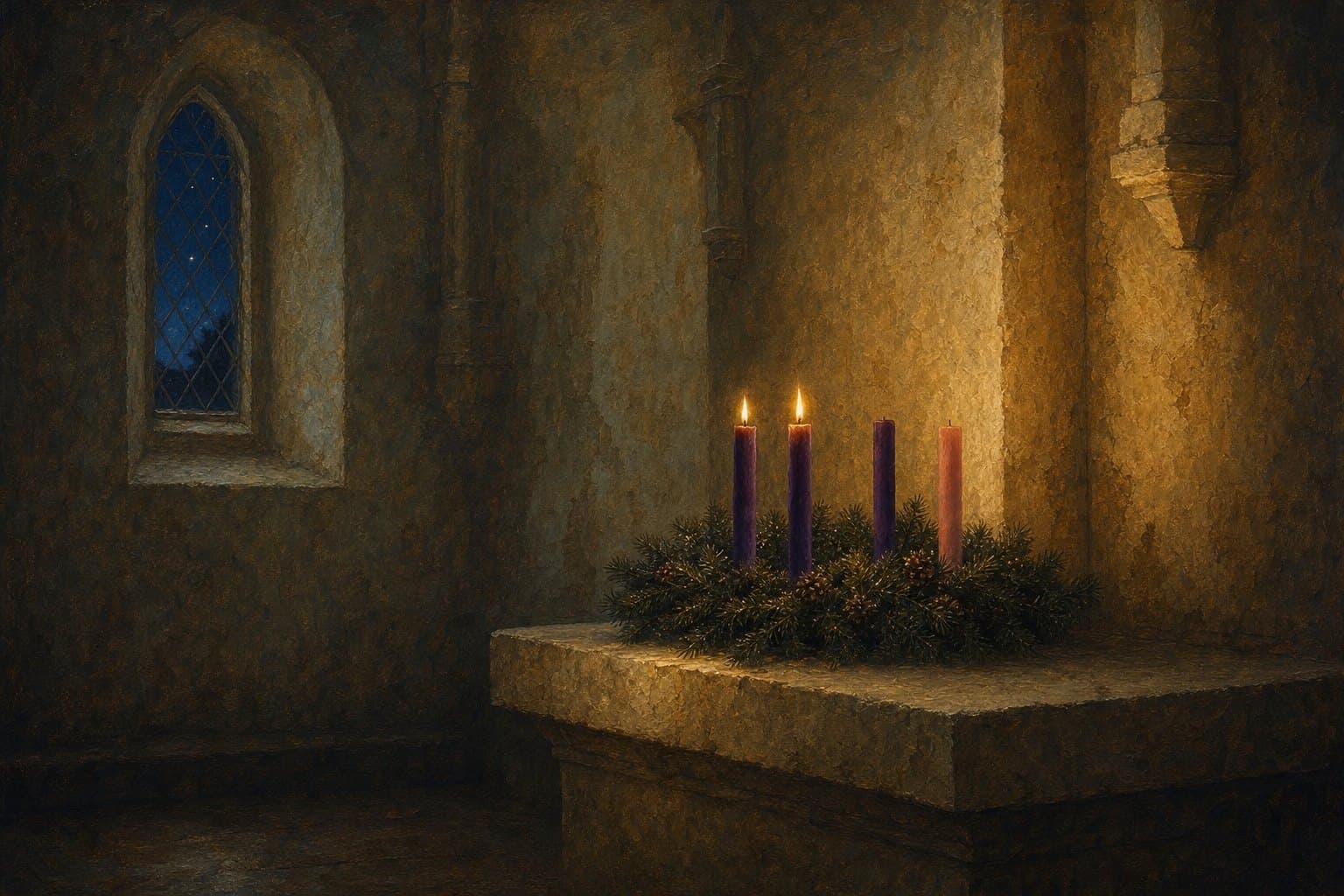
The novena runs through Advent. Keeping a wreath at home? The Advent wreath — which candle is lit on which Sunday, and a prayer for each week.
For the children beside the novena, there is the Jesse tree — one ornament and one short reading a night, from Creation to the manger.
The novena ends on Christmas Eve. For the night itself and the day that follows, see our Christmas prayers — a Christmas Eve prayer, a grace for Christmas dinner, and the blessing of the crèche.
Beside the fifteen daily prayers of the novena, many people add one more for the day itself: a short Advent prayer for each day — from the First Sunday of Advent to Christmas Eve.
Questions people ask
When does the St. Andrew Christmas novena start?
On November 30, the feast of St. Andrew, and it continues through to Christmas Eve on December 24. Some older sources simply say “until Christmas”; either way it is about twenty-five days.
Who wrote the St. Andrew Christmas novena?
Nobody knows. It is believed to have come from Ireland, but no source names an author. The earliest fixed point is an imprimatur from the Archbishop of New York, Archbishop Corrigan, dated February 6, 1897, printed on the holy cards that spread it.
Why is it called a novena if it lasts twenty-five days?
The name is loose. It is a Christmas devotion named for the feast day it begins on rather than a strict nine-day novena. The word novena is often used broadly for any fixed devotional stretch.
What is the novena prayer to St. Andrew?
The novena that carries his name is one short prayer addressed to God, not to St. Andrew. It opens “Hail and blessed be the hour and moment”, dwells on Christ’s birth at midnight in Bethlehem, asks God to hear your request, and closes “Through the merits of Our Saviour Jesus Christ, and of His blessed Mother.” It bears his name only because it begins on his feast, November 30.
What do people pray to Saint Andrew for?
He is the patron of fishermen and of Scotland. Because John’s Gospel shows him bringing his brother Simon Peter to Jesus, he is a natural saint to ask for someone you hope will come to Christ; ask him in your own words. The Christmas novena named after him is different: it is prayed to God, and only begins on his feast.
How many times a day do you say the St. Andrew novena?
Fifteen, every day from November 30 through December 24, which comes to 375 prayers by Christmas Eve. They can be said at one sitting, though many people find it easier to spread them out: five on waking, five at midday, five before bed. The count is the tradition, not a rule, and nothing is void on a day you say fewer.
What happens if I skip a day of the St. Andrew novena?
Simply carry on the next day with that day’s fifteen. No rule sends you back to November 30, because this is a private devotion and not a law of the Church. The count is there to keep Christ’s birth in front of you through Advent, and one missed day does not cancel the days you kept.
Does the novena guarantee that my intention will be granted?
No, and you should be cautious of versions that say so. A devotion that promises a specific outcome in exchange for a specific number of repetitions has drifted from prayer toward transaction. God is asked in prayer, never obliged by it.