
The St. Thérèse of Lisieux Novena
Nine days with the Carmelite who promised to spend her heaven doing good on earth
The best-known St. Thérèse novena is the Novena of the Twenty-four Glory Bes: for nine days, a short prayer of thanks to the Holy Trinity for the graces given to St. Thérèse, then the Glory Be said twenty-four times, once for each year of her life. To close on the eve of her feast on October 1, pray it from September 22 to September 30, the day she died; it is also prayed from the 9th to the 17th of any month. AngelGuard gives the prayer, the dates and an honest account of the rose below.
Quick facts
The St. Thérèse novena prayer
This is the Novena of the Twenty-four Glory Bes as EWTN prints it. The prayer is addressed to the Holy Trinity, thanking God for what he gave St. Thérèse in her twenty-four years and asking one favour through her merits, on the condition every Christian prayer carries: if it is God’s will.
Holy Trinity, God the Father, God the Son, and God the Holy Ghost, I thank Thee for all the blessings and favors Thou hast showered upon the soul of Thy servant Theresa of the Child Jesus, during the twenty-four years she spent here on earth, and in consideration of the merits of this Thy most beloved Saint, I beseech Thee to grant me this favor, if it is in accordance with Thy most Holy Will and is not an obstacle to my salvation.
(Name your intention.)
Then the Glory Be, twenty-four times:
Glory be to the Father, and to the Son, and to the Holy Ghost.
As it was in the beginning, is now, and ever shall be, world without end. Amen.
Between each Glory Be, if you wish:
Saint Theresa of the Child Jesus, pray for us.
Say the whole thing once on each of the nine days. It takes about ten minutes, and the twenty-four Glory Bes can be counted on a rosary: two decades, then four more beads (see how to pray the Rosary for the beads). For a shorter prayer to St. Thérèse on any day, see the prayer to St. Thérèse.
When to pray the St. Thérèse novena: September 22 to 30
St. Thérèse died on the evening of September 30, 1897, and her feast is October 1. To end the novena on the eve of the feast, begin on September 22:
- Day 1: September 22
- Day 2: September 23
- Day 3: September 24
- Day 4: September 25
- Day 5: September 26
- Day 6: September 27
- Day 7: September 28
- Day 8: September 29
- Day 9: September 30, the anniversary of her death
The Society of the Little Flower, the Carmelite friars’ apostolate for her in the United States, begins its Feast Day Novena on September 22 as well. The Twenty-four Glory Be novena has a second tradition of its own: EWTN recommends praying it from the 9th to the 17th of any month, so as to join everyone else who is praying it at the same time. And like every novena, it can simply be begun on the day it is needed.
The St. Thérèse rose: a custom, not a promise
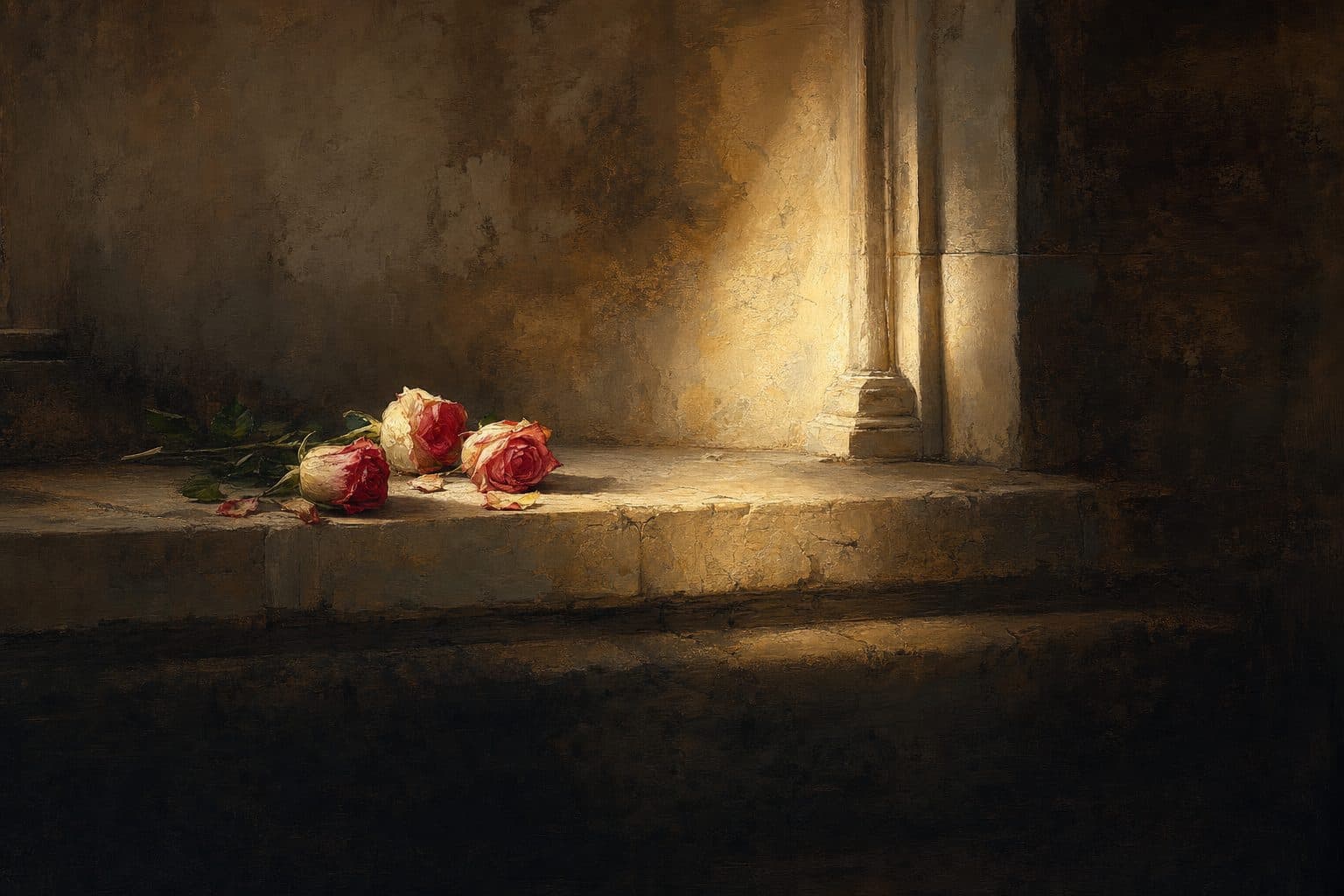
Many people who pray this novena ask St. Thérèse to send a rose as a sign that the prayer has been heard. The custom is warm, a century old, and harmless held lightly. It is also a popular custom, not Church teaching, and it is worth knowing where it comes from.
What Thérèse said. On June 9, 1897, when her sister Marie told her how hard it would be when she left them, Thérèse answered, in the words her sister Pauline wrote down in the notebook now kept at the Carmel of Lisieux: “Oh! no, you will see, it will be like a shower of roses.” The more famous sentence, “After my death I will let fall a shower of roses”, is a saying her sisters reported, first printed in 1898 in Story of a Soul. Neither promises a flower to anyone who prays a novena.
Where the rose novena comes from. As EWTN tells it, a Jesuit, Fr. Putigan, began to pray twenty-four Glory Bes a day on December 3, 1925, asking St. Thérèse for a favour and for a freshly picked rose as a sign; on the third day a stranger brought him one, and when he prayed again for a white rose, a nursing sister brought him one that had fallen beneath her picture. He promised to spread the novena, and it spread. EWTN gives no primary source for the account; it is the story as it has been handed on. The short “rose prayer” (“O Little Thérèse of the Child Jesus, please pick for me a rose…”) is newer still, and no source we could find says who wrote it.
What to make of it. The Society of the Little Flower, which prints the rose prayer on the back of its own prayer card, says plainly: “One does not pray for roses.” A rose, if one comes, is a consolation. No rose means nothing at all about whether you were heard. The Catechism calls it superstition to attribute the effect of a prayer to its mere external performance (CCC 2111), and a novena prayed as a test God has to pass has quietly turned into one. Thérèse, of all saints, would not have wanted to be treated as a vending machine.
“I want to spend my heaven doing good on earth”
The sentence that sums up why people pray to her comes from July 17, 1897, ten weeks before she died. Her sister wrote it down that day. In our translation from the French of the Carmel’s notebook:
“I feel that I am about to enter into rest… But above all I feel that my mission is about to begin, my mission of making God loved as I love him, of giving my little way to souls. If God grants my desires, my heaven will be spent on earth until the end of the world. Yes, I want to spend my heaven doing good on earth.”
That is the real ground of every novena to her. Not a promise of roses, but her own desire, recorded in her last months, to go on helping people come to God. When you pray to her, you are taking her at her word.
Who was St. Thérèse of Lisieux?
Thérèse Martin was born at Alençon in Normandy on January 2, 1873, the youngest daughter of Louis and Zélie Martin, who are themselves now saints. She entered the Carmelite convent at Lisieux on April 9, 1888, at fifteen, and never left it. She died of tuberculosis on September 30, 1897, at twenty-four. Nothing about her life would have been recorded except that her prioress had asked her to write down her memories, and after her death they were published as Story of a Soul.
The book went around the world. Pope Pius XI beatified her on April 29, 1923, canonised her on May 17, 1925, and on December 14, 1927, named her patron of the missions together with St. Francis Xavier, though she never left her convent. On October 19, 1997, Pope St. John Paul II declared her a Doctor of the Church, one of only a handful of women with that title. He described her “little way” as “the Gospel way of holiness for all”.
The little way is her discovery that holiness is not for the spiritually strong. She found it in Scripture, in God’s invitation “Whoever is simple, let him turn in here!” (Proverbs 9:4) and in his promise, “As one whom his mother comforts, so I will comfort you” (Isaiah 66:13). It means doing small things with great love, and letting God carry you where you cannot climb, the same trust the Surrender Novena asks for in one line. It is, in the end, the Gospel: “unless you turn and become as little children, you will in no way enter into the Kingdom of Heaven” (Matthew 18:3).
Nine days with St. Thérèse: a thought for each day
If you want each day of the novena to carry a thought from her little way, here are nine of ours, each with a line of Scripture:
- Littleness. “Whoever therefore humbles himself as this little child is the greatest in the Kingdom of Heaven” (Matthew 18:4).
- Trust. Let yourself be carried: “As one whom his mother comforts, so I will comfort you” (Isaiah 66:13).
- Small things. “He who is faithful in a very little is faithful also in much” (Luke 16:10). Do one hidden kindness today.
- Love. “Love is patient and is kind” (1 Corinthians 13:4). Be patient with one person who tries you.
- Suffering. For the sick, and for everyone carrying something no one else can see.
- The missions. “Pray therefore that the Lord of the harvest will send out laborers into his harvest” (Matthew 9:38).
- Priests. She prayed all her life for priests. Pray today for yours.
- Mercy. “God is love, and he who remains in love remains in God” (1 John 4:16).
- Thanksgiving. “I thank you, O Father, Lord of heaven and earth, that you have hidden these things from the wise and understanding, and revealed them to little children” (Luke 10:21).
What is the St. Thérèse of Lisieux novena?
The St. Thérèse Novena is nine days with a Carmelite who died at twenty-four in 1897, having done nothing the world would have recorded, and who was named a Doctor of the Church a century later. What she left is a way of praying she called the little way. Her argument is that holiness is not a ladder to be climbed by people with the stamina for it, but something reached by staying small and letting oneself be carried. She compared it to a lift in place of a staircase. For anyone who has read the lives of the saints and quietly concluded they could never manage it, this is the correction, and it is the reason she is one of the most widely loved saints in the Church. She said, near the end, that she would spend her heaven doing good on earth, and that she would let fall a shower of roses. From that comes the custom attached to this novena: people ask for a rose as a sign that the prayer has been heard. That custom deserves an honest word. A rose is a sign people have found consoling for a century, and it is not a guarantee, a test, or a mechanism. Praying and receiving no rose says nothing about whether you were heard. Thérèse of all saints would have been impatient with the idea that God can be required to produce a receipt.
How to pray it
Keep the intention small and real. This is the saint of ordinary things, and a novena to her about something grand and abstract works against its own grain. Read a little of her while you pray it. Her autobiography, Story of a Soul, is short and unguarded, and nine days is about the right length to read the part that matters. The novena becomes a different thing when you can hear her voice in it. If you ask for a rose, ask lightly. The custom is warm and it is not a wager. Watch for it and do not grade the novena on whether one arrives. And take the little way seriously as a method rather than a sentiment. It means doing the next small thing, with attention, without needing it to be seen. Nine days is long enough to find out how difficult that actually is.
Other novenas
Frequently Asked Questions
Upcoming · Oct 28
Sts. Simon and Jude
See the full liturgical calendar — every feast this year, and an embed for your parish site.