Catholic Faith
The Seven Archangels
The seven archangels: Scripture names only three (St. Michael, St. Gabriel and St. Raphael), and the Church names no others.
Scripture names three archangels, St. Michael, St. Gabriel and St. Raphael, and the Church celebrates all three on September 29. The idea of seven comes from Tobit 12:15, but Scripture never names the other four, and the Church discourages names taken from other texts.
“For I am the angel Raphael, one of the seven, who stand before the Lord.”
Go deeper
Full Explanation
- Three archangels are named in Scripture: St. Michael, St. Gabriel, St. Raphael
- All three share one feast day, September 29
- The number seven comes from Tobit 12:15, a book in the Catholic canon
- The remaining four names come from non-canonical writings such as 1 Enoch
- Church guidance discourages naming angels beyond the three
Three archangels are named in Scripture, and each is given a job rather than a personality.
St. Michael is the defender. His name is a question, Who is like God, and it is the question that settles every argument about rank in the universe. Revelation puts him at the head of the heavenly army. He is the one Catholics have turned to under threat for as long as there has been a Church.
St. Gabriel is the messenger. He appears to Daniel, to Zechariah, and to Mary, and every appearance is an announcement that changes what happens next. When he introduces himself to Zechariah he does it by describing where he normally is: standing in the presence of God.
St. Raphael is the healer, and his story is the most human of the three. In the Book of Tobit he travels with a young man for the entire length of a journey disguised as an ordinary companion, arranges a marriage, drives off a demon, and heals an old man’s blindness, and only at the end does he say what he is. Anyone who has ever wondered whether help was present without being recognised is reading their own situation in that book.
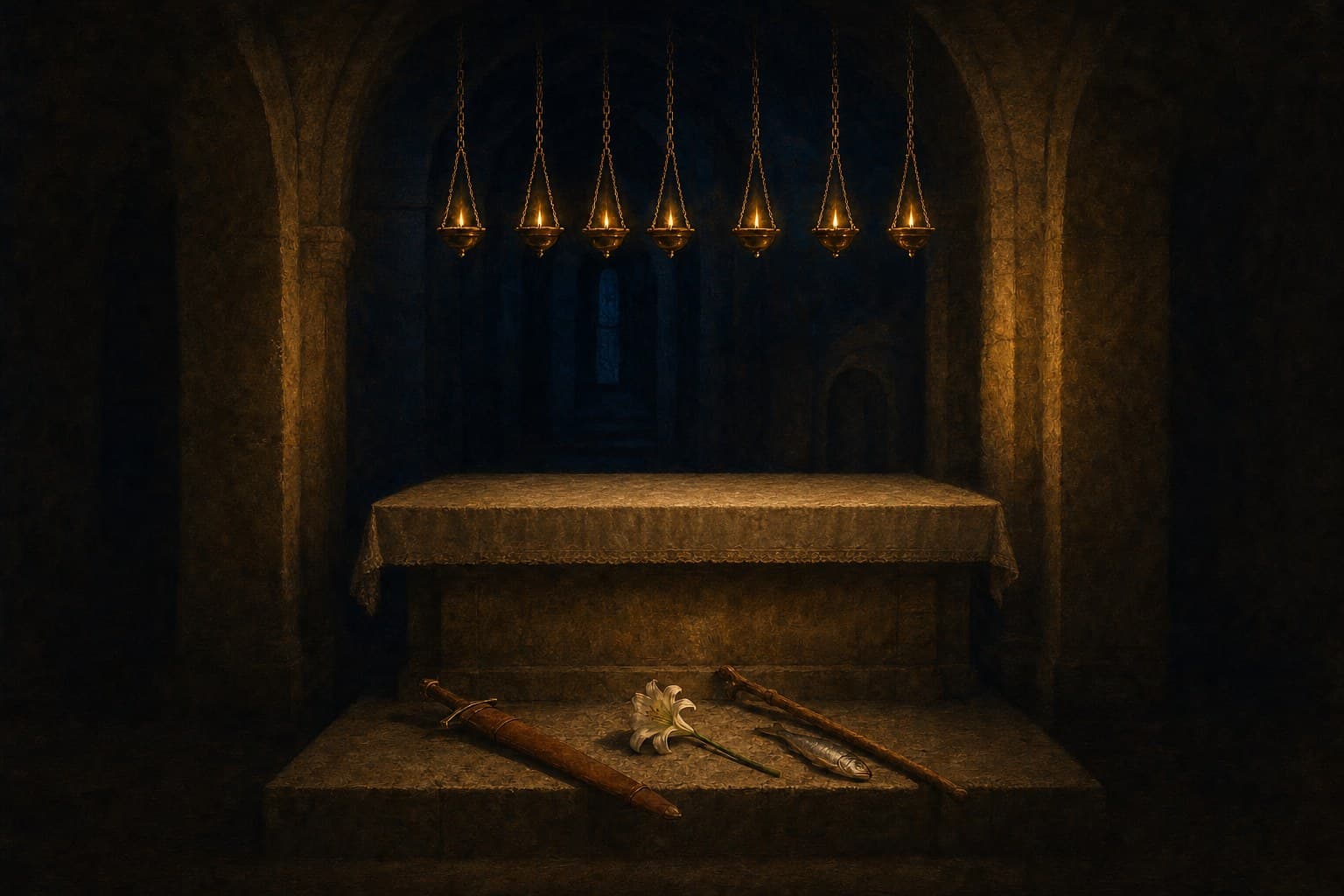
So where does seven come from? From Raphael himself. At the moment he reveals his identity he says he is one of seven holy angels who present the prayers of the saints and go in before the glory of God. That single line is the whole scriptural basis for the number, and Scripture never supplies the other four names.
Names do circulate: Uriel most commonly, then variations such as Selaphiel, Jegudiel, Barachiel, Raguel. They come from writings outside the canon, chiefly 1 Enoch, and their history is tangled. The Church has been deliberately cautious here, and the Directory on Popular Piety and the Liturgy discourages giving angels names other than the three Scripture provides.
That caution is not fussiness. Devotion attaches itself to names, and a name that arrived through an uncertain channel can quietly carry other things with it. The three named angels are more than enough, and each one covers something people actually need: defence, a word from God, and healing on a road you are already walking.
How many archangels are there?
The honest answer has three numbers in it. Scripture names three angels: St. Michael, St. Gabriel and St. Raphael. It speaks of seven who stand before God, once in the Old Testament and once in the New. And it uses the word archangel only twice, both times in the New Testament: “the Lord himself will descend from heaven with a shout, with the voice of the archangel” (1 Thessalonians 4:16), and “Michael, the archangel” (Jude 1:9).
The seven come first from Raphael’s own words when he reveals who he is: “I am Raphael, one of the seven holy angels which present the prayers of the saints and go in before the glory of the Holy One” (Tobit 12:15). St. John sees the same company in heaven: “I saw the seven angels who stand before God, and seven trumpets were given to them” (Revelation 8:2). That is the whole of the biblical basis for the number. Scripture never names the other four, and it never says how many archangels there are in total.
So the Catholic answer to “how many archangels are there?” is: three known by name, seven who stand before God according to Tobit and Revelation, and beyond that, as many as God has made. The Catholic Encyclopedia puts it simply: “The only Scriptural names furnished of individual angels are Raphael, Michael, and Gabriel.”
The three archangels named in the Bible
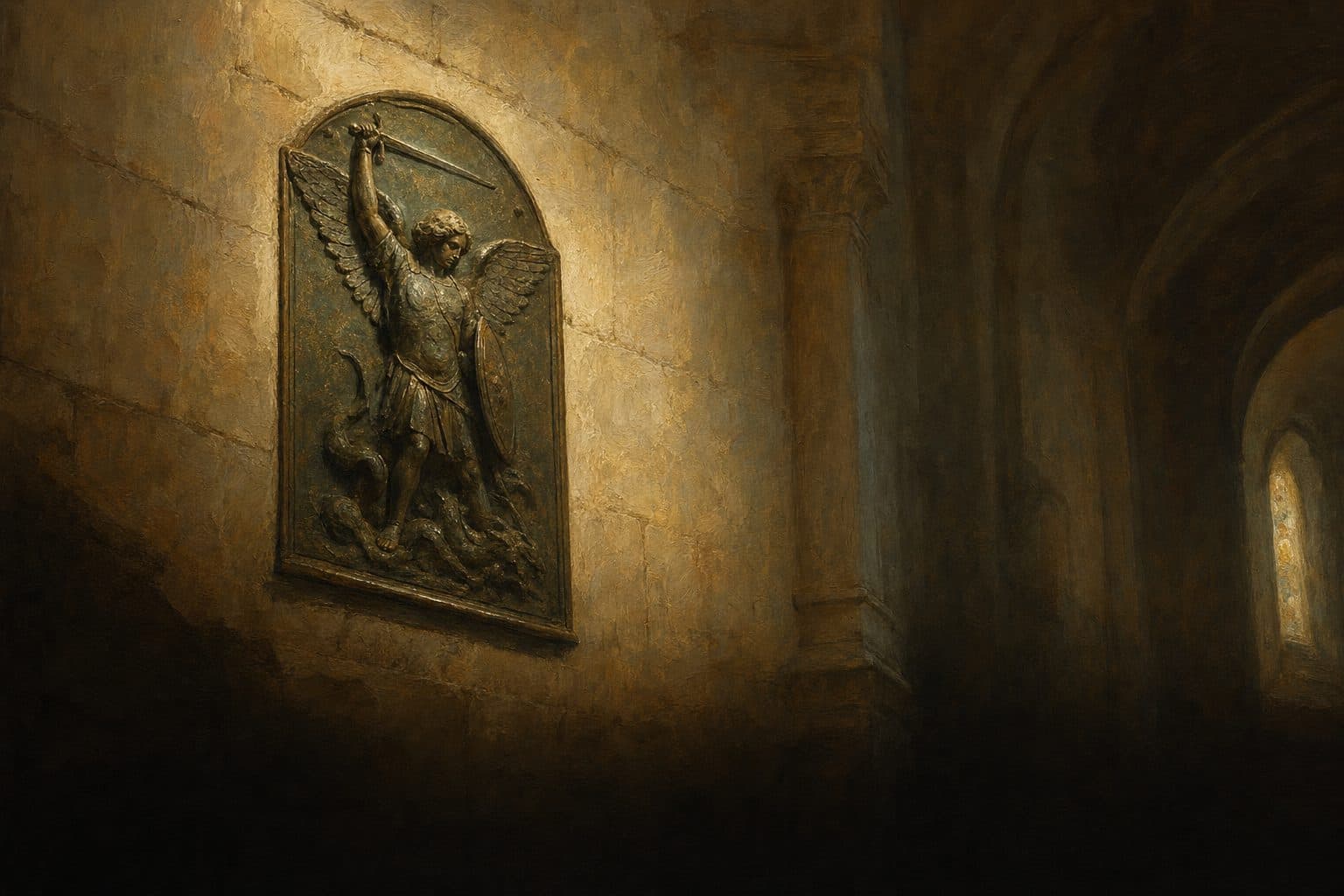
St. Michael, “Who is like God?” The archangel is named four times in Scripture, and every time he is defending: “Michael, one of the chief princes, came to help me” (Daniel 10:13); he “will stand up” for God’s people in the time of trouble (Daniel 12:1); he disputes with the devil but leaves the rebuke to God (Jude 1:9); and he leads the angels against the dragon (Revelation 12:7). That is why the Church asks his help in spiritual danger and keeps the St. Michael prayer.
St. Michael the Archangel,
you asked, “Who is like God?”
and stood on the side of the answer.
Pray for me, that I may never put anything in God’s place,
and ask God to defend me and the people I love.
Amen.
St. Gabriel, “the strength of God.” He explains Daniel’s visions (Daniel 8:16; 9:21), and in the New Testament he announces the two births everything turns on: John the Baptist’s to Zechariah, and Christ’s to Mary. “Now in the sixth month, the angel Gabriel was sent from God to a city of Galilee named Nazareth” (Luke 1:26). He describes himself by where he stands: “I am Gabriel, who stands in the presence of God” (Luke 1:19). He is the angel of the Annunciation, which the Church remembers three times a day in the Angelus.
St. Raphael, “God has healed.” His whole story is in the Book of Tobit. He travels as a companion with the young Tobias, protects him, frees Sarah and heals Tobit’s blindness, and only at the end does he explain himself: “And now God sent me to heal you and Sarah your daughter-in-law” (Tobit 12:14). Travellers, the sick and people looking for a husband or wife ask his prayers for exactly that reason.
Short prayers to St. Gabriel and St. Raphael
These are short prayers of our own, asking each archangel to pray for us to God. They can be said on September 29, their shared feast, or on any day the need matches the angel.
St. Gabriel, messenger of God,
you brought Mary the news that changed everything.
Pray for me, that I may hear what God is asking of me
and answer as she did: let it be done according to your word.
Amen.
St. Raphael, companion on the road,
you walked with Tobias the whole way before he knew who you were.
Pray for me and for all who are travelling, sick or searching,
and ask God to heal what I cannot heal.
Amen.
Uriel and the other names: where they come from
The names that fill out the list of seven come from outside the Bible Catholics read. The oldest source is the Book of Enoch, a Jewish writing from the centuries before Christ that is not in the Catholic canon. Its twentieth chapter lists seven “holy angels who watch”: Uriel, Raphael, Raguel, Michael, Saraqael, Gabriel and Remiel. Uriel also appears in 2 Esdras, a book printed in an appendix to the Latin Vulgate and not part of the canon.
The Eastern Orthodox Church developed its own list for the feast it keeps on November 8, the Synaxis of the Archangel Michael and the other bodiless powers. The Orthodox Church in America names St. Michael with Gabriel, Raphael, Uriel, Selaphiel, Jehudiel, Barachiel and Jeremiel, which makes eight, several of them taken from 2 Esdras. Lists in popular books mix all of these, which is why no two pages online give the same seven.
In the West the question was settled early and firmly. On October 25, 745, a synod in Rome under Pope Zachary examined a prayer written by a wandering preacher named Aldebert, which called on eight angels by name: Uriel, Raguel, Tubuel, Michael, Adinus, Tubuas, Sabaoc and Simiel. The bishops answered that apart from St. Michael these were not names of angels at all, and that they knew the names of only three: Michael, Gabriel and Raphael, the three archangels of Scripture. That is the tradition the Church’s guidance still follows.
What the Church says about naming angels
The Church’s guidance on popular devotion, the Directory on Popular Piety and the Liturgy issued by the Holy See in 2001, calls devotion to the angels “legitimate and good” and then names the ways it goes wrong. One of them is the idea that the world is an incessant battle between good and evil spirits “in which man is left at the mercy of superior forces and over which he is helpless”. Another is reading every setback as the devil and every success as an angel. And it ends with a line about names:
“The practice of assigning names to the Holy Angels should be discouraged, except in the cases of Gabriel, Raphael and Michael whose names are contained in Holy Scripture.” (Directory on Popular Piety, §217)
This does not deny that the other four exist; Raphael himself says there are seven. It asks Catholics not to pray to them under names that reach us through uncertain channels. A name in prayer is a relationship, and the three names God has given are enough. The same Directory lists the Church’s feasts of the angels: September 29 for St. Michael, St. Gabriel and St. Raphael, and October 2 for the Guardian Angels (§215).
Who are the 12 archangels?
There is no list of twelve archangels in Scripture, in the Catholic tradition, in the Eastern churches, or even in the Book of Enoch, which has seven. The lists of twelve that circulate online, often with a colour, a crystal and a “power” assigned to each, are modern popular compilations with no agreed source, and no two of them agree. They treat the angels as forces to be summoned for particular results. That is exactly the kind of devotion the Directory on Popular Piety warns against. Angels are not a menu of powers. They are servants of God, and a Christian asks God, not the angel, for the outcome.
The same goes for “the four archangels”. Lists of four add Uriel to the three, because he stands beside them in the Book of Enoch and in 2 Esdras. It is an old name, but it is not in the Bible Catholics read, it is one of the names the synod of 745 set aside, and the Church names only three.
What do archangels look like?
Nothing, in themselves: angels are pure spirits without bodies. The Catechism calls them “spiritual, non-corporeal beings” (CCC 328). When they appear in Scripture they take whatever form the message needs. Raphael looked so ordinary that Tobias hired him as a guide. Gabriel is called “the man Gabriel” in Daniel 9:21. The wings, swords, lilies and fish of Christian art are symbols of what each one does: St. Michael’s sword and scales for defence and judgment, St. Gabriel’s lily for the Annunciation, St. Raphael’s staff and fish for the journey and the healing in Tobit.
For how the archangels fit among the other choirs of angels, see the hierarchy of angels. For the one angel assigned to you personally, see the Guardian Angel prayer.
What the Bible Says
I am Raphael, one of the seven holy angels which present the prayers of the saints and go in before the glory of the Holy One.”
The single verse behind the idea of seven archangels, and the reason it belongs to Catholic rather than Protestant tradition: Tobit is in the Catholic canon. Raphael names the number and never names the others.
There was war in the sky. Michael and his angels made war on the dragon. The dragon and his angels made war.
St. Michael, the archangel, is given command, not merely membership. The verse is the root of every image of him with a sword, and of the Church’s long habit of calling on him when something needs defending.
The angel answered him, “I am Gabriel, who stands in the presence of God. I was sent to speak to you and to bring you this good news.
Gabriel identifies himself by location rather than rank. He is defined by where he stands, and the message he carries derives its authority from that rather than from him.
What the Catechism Says
CCC 328-330The Catechism affirms angels as a truth of faith and describes them as personal, immortal, purely spiritual creatures with intelligence and will.
CCC 331-333It places the angels in relation to Christ, describing them as belonging to him and present throughout the whole of salvation history rather than as an independent order.
Common Questions
How many archangels are there?
Scripture names three, St. Michael, St. Gabriel and St. Raphael, and speaks of seven angels who stand before God (Tobit 12:15; Revelation 8:2). The word archangel itself appears only twice, in 1 Thessalonians 4:16 and Jude 1:9. Beyond that the Bible gives no total.
Who are the 12 archangels?
There is no list of twelve archangels in Scripture or in Catholic or Orthodox tradition. Lists of twelve are modern popular compilations, usually assigning each angel a colour and a power, and the Directory on Popular Piety asks Catholics not to name angels beyond the three Scripture names.
Who are the seven archangels?
Scripture names three: St. Michael, St. Gabriel, and St. Raphael. The number seven comes from Tobit 12:15, where Raphael says he is one of seven holy angels who stand before God, but the other four are never named in the canonical text.
Why does the Church only name three archangels?
Because those are the three Scripture names. The other names in circulation come from writings outside the canon, chiefly 1 Enoch, and the Directory on Popular Piety and the Liturgy discourages naming angels beyond the three the Bible provides.
Is Uriel a real archangel?
Uriel appears in non-canonical Jewish and early Christian writings rather than in the Catholic canon. The Church does not deny that other angels exist, since Raphael speaks of seven, but it discourages devotion under names that reach us through uncertain sources.
What is each archangel known for?
St. Michael is the defender who leads the heavenly host against the dragon. Gabriel is the messenger who announces God’s decisive news, including to Mary. Raphael is the healer, who travels the length of the Book of Tobit disguised as an ordinary companion before revealing himself.
When is the feast of the archangels?
September 29, kept as the single feast of Saints Michael, Gabriel, and Raphael. It is often called Michaelmas, and the St. Michael novena is traditionally timed to close on its eve, September 28.
Why is Raphael in the Catholic Bible but not most Protestant ones?
Because his story is told in the Book of Tobit, which belongs to the deuterocanonical books included in the Catholic canon and generally absent from Protestant Bibles. That is also why the seven-archangel tradition is more at home in Catholic devotion.