Protection
The Armor of God Prayer
Put on the whole armor of God, that you may be able to stand against the wiles of the devil.
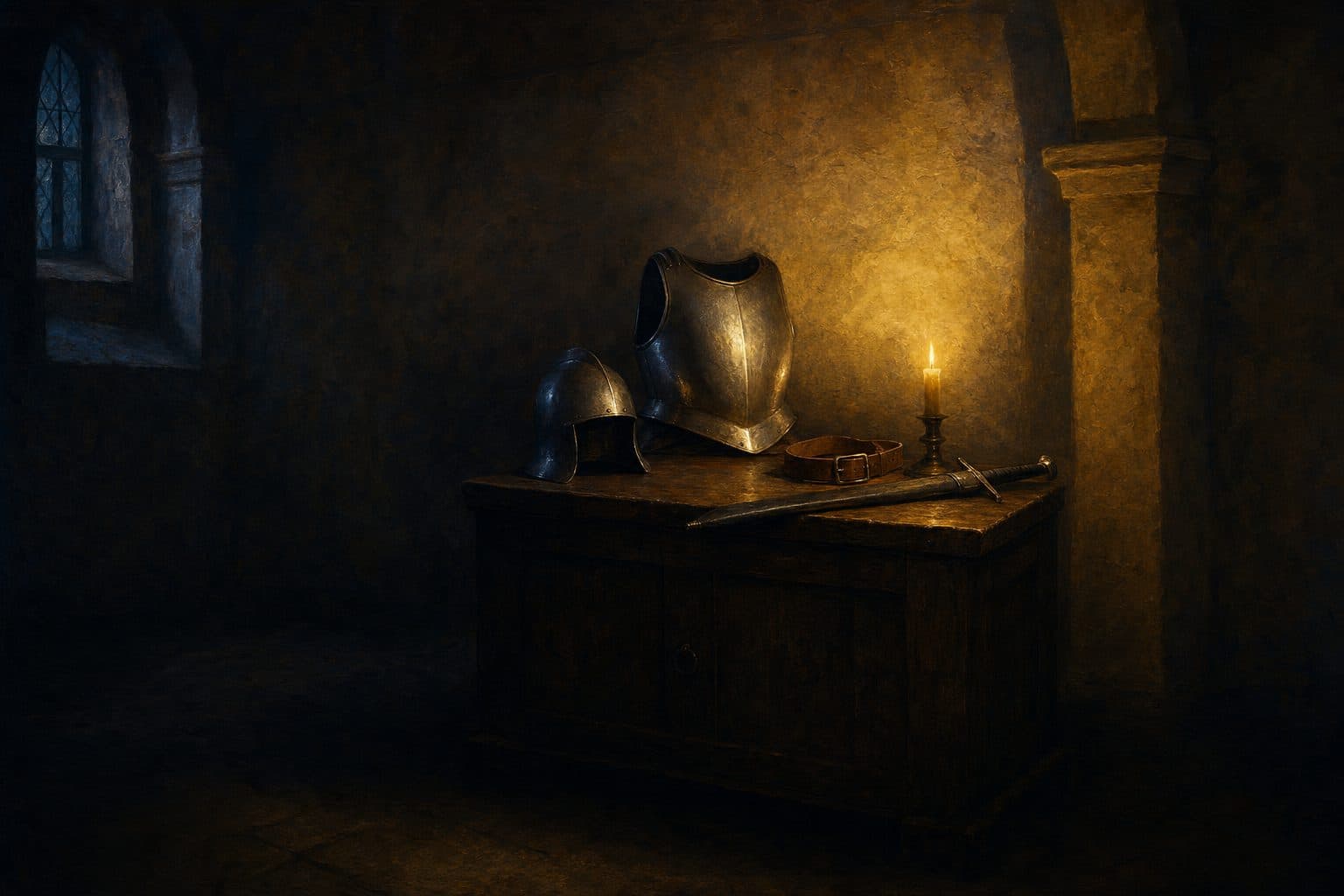
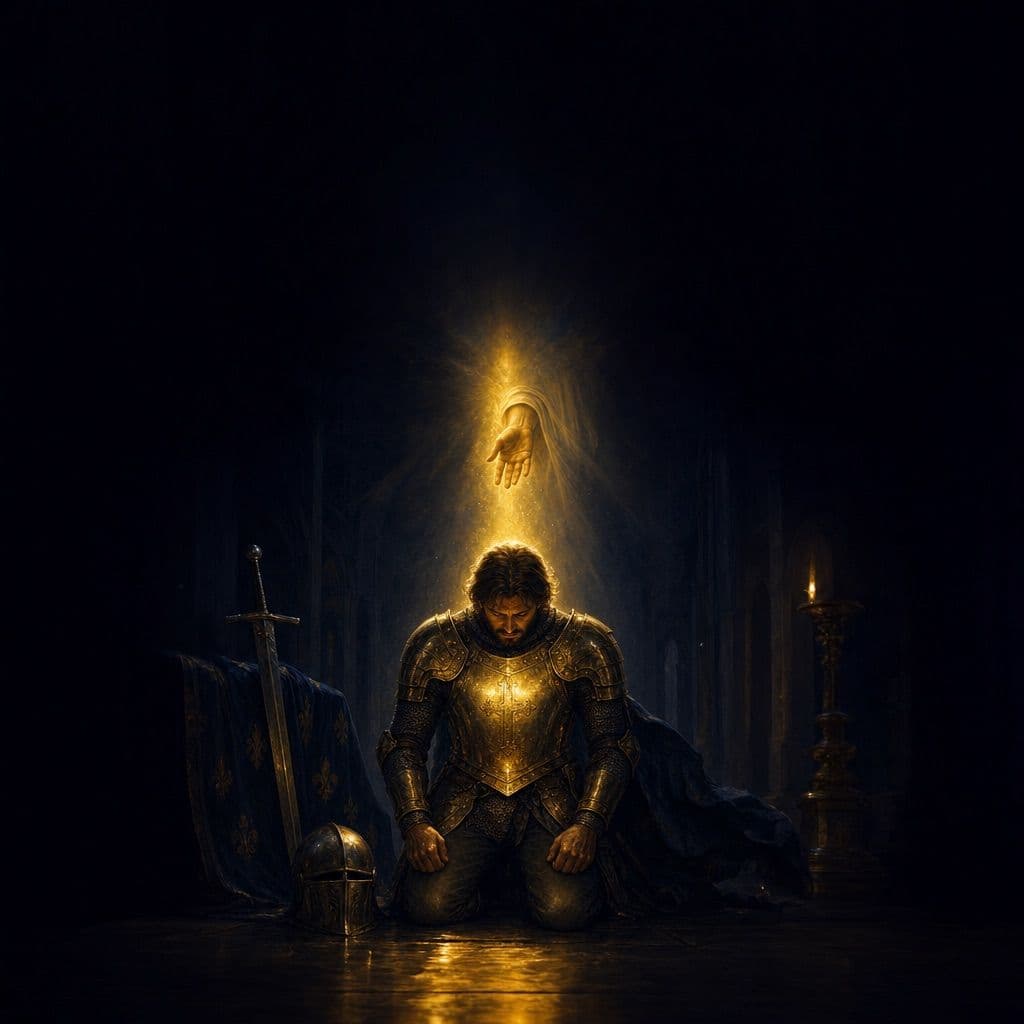
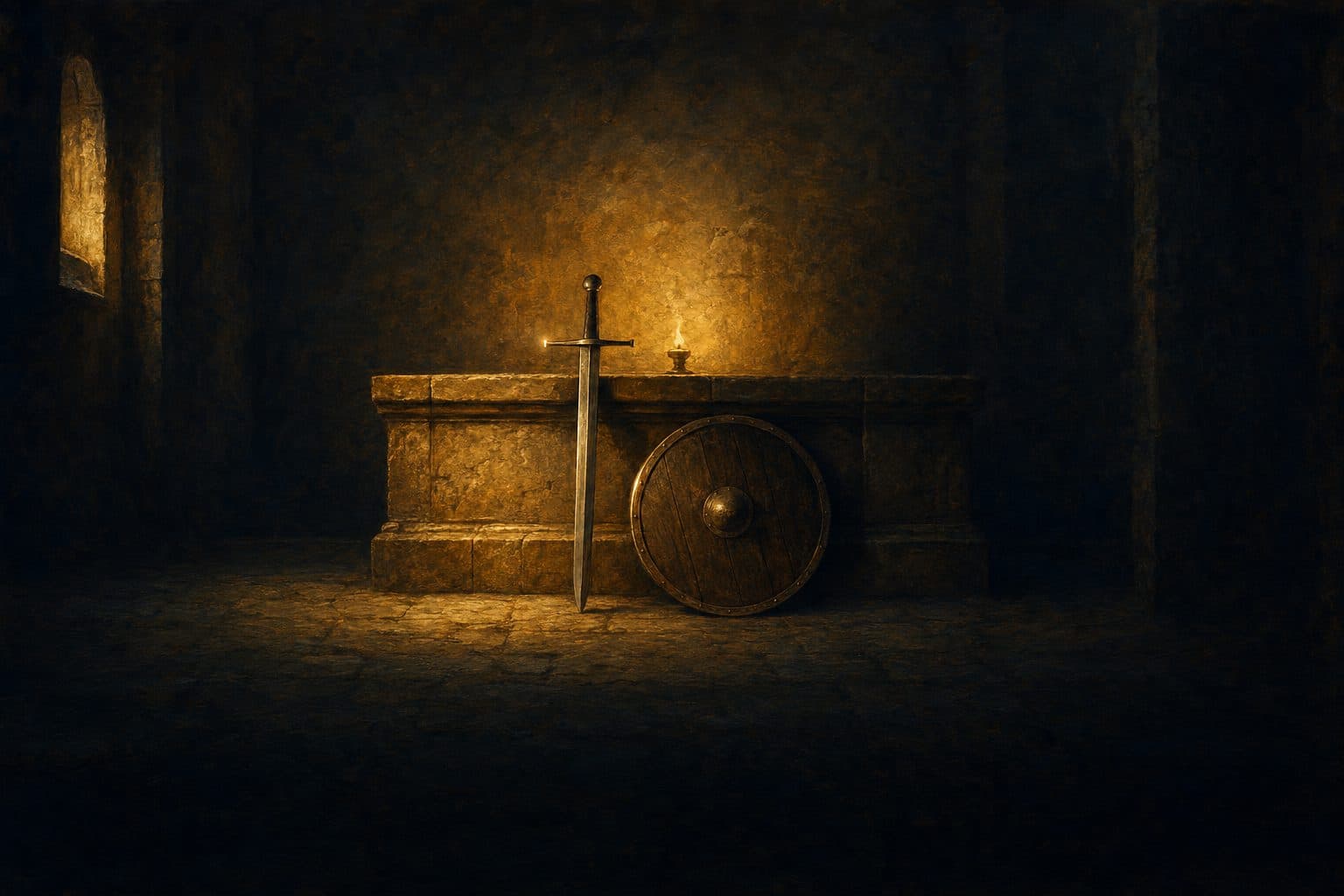
An armor of God prayer: “Lord Jesus, clothe me today in your armor. Fasten the belt of truth around me and guard my heart with the breastplate of righteousness. Make my feet ready to bring your peace. Give me the shield of faith against every fiery dart of the evil one, the helmet of salvation, and the sword of the Spirit, your word. Keep me praying at all times in the Spirit. Amen.” The armor of God comes from Ephesians 6:10–18: the belt of truth, the breastplate of righteousness, the shoes of the Good News of peace, the shield of faith, the helmet of salvation and the sword of the Spirit, all held together by prayer. Below: the passage itself, each piece of the armor and the virtue it stands for, a short daily form, how to pray it over your family, and why “putting on the armor” is a prayer to God and not a spell.
The Armor of God Prayer — Full Text
A prayer through each piece of the armor described in Ephesians 6:10–18.
Heavenly Father, I put on the full armor of God, that I may be able to stand against the schemes of the devil. For my struggle is not against flesh and blood, but against the rulers, against the authorities, against the powers of this dark world and against the spiritual forces of evil in the heavenly realms.
I PUT ON THE BELT OF TRUTH:
Lord, gird me with Your truth. Expose every lie of the enemy. Let me walk in honesty and integrity. Your Word is truth, and the truth sets me free.
I PUT ON THE BREASTPLATE OF RIGHTEOUSNESS:
Lord, guard my heart with Your righteousness. Not my own, but the righteousness of Christ that covers me. Protect my emotions, my desires, and my will from the arrows of the enemy.
I PUT ON THE SHOES OF THE GOSPEL OF PEACE:
Lord, let me walk in Your peace today. Wherever my feet tread, let Your kingdom come. Give me readiness to share the Gospel and to bring Your peace to every situation.
I TAKE UP THE SHIELD OF FAITH:
Lord, strengthen my faith. With it I extinguish all the flaming arrows of the evil one — every doubt, every fear, every temptation, every lie. I trust in You completely.
I PUT ON THE HELMET OF SALVATION:
Lord, protect my mind. Guard my thoughts. Let me think only on what is true, noble, right, pure, lovely, and admirable. I reject every intrusive thought from the enemy.
I TAKE UP THE SWORD OF THE SPIRIT:
Lord, Your Word is my weapon. It is living and active, sharper than any double-edged sword. I stand on Your promises and declare Your truth over my life.
Father, with this full armor I take my stand. I am strong in You and in Your mighty power. No weapon formed against me shall prosper. Through Christ who strengthens me, I am more than a conqueror. Amen.
— Based on Ephesians 6:10-18
From the Church’s tradition: Drawn directly from St. Paul’s letter to the Ephesians (6:10–18) — the New Testament’s own teaching on how a Christian dresses for spiritual battle, which the Catechism reads as the battle of prayer (CCC 2725, 2742).
Keep this prayer with you
Share the Armor of God card
A prayer card you can send to someone who needs it tonight, save to your phone, or print for your wall.
Go deeper
About this prayer
1 min readWhen St. Paul wanted to teach the young Church how to stand against the devil, he reached for the equipment of the Roman soldier guarding him: belt, breastplate, shoes, shield, helmet, sword.
When St. Paul wanted to teach the young Church how to stand against the devil, he reached for the equipment of the Roman soldier guarding him: belt, breastplate, shoes, shield, helmet, sword. Ephesians 6:10–18 is the closest thing the New Testament has to a manual of spiritual defense — and Christians have prayed their way through that armor, piece by piece, ever since.
The prayer below walks through each piece of the armor as a morning consecration: truth, righteousness, the readiness of the Gospel of peace, faith, salvation, and the word of God. Pray it slowly — preferably at the start of the day, before the battle finds you. After it, the passage in full, and what each piece means.
What the armor of God means
2 min readPaul’s image is precise, not decorative.
Paul’s image is precise, not decorative. Every piece answers a real form of attack. The belt of truth holds everything else together — because the enemy’s native weapon is the lie; Jesus calls the devil “a liar, and the father of lies” (John 8:44). The breastplate of righteousness guards the heart; the shoes of the Gospel of peace keep a soldier moving instead of pinned down; the shield of faith is named as the piece “with which you will be able to quench all the fiery darts of the evil one” (Ephesians 6:16).
Notice what the armor is made of: nothing in the list is a trophy won by effort alone. Truth, righteousness, peace, faith, salvation, the word of God — each one is Christ’s gift, put on rather than produced. That is why the passage begins “be strong in the Lord and in the strength of his might” (Ephesians 6:10). The armor of God is, finally, Christ himself: “put on the Lord Jesus Christ” (Romans 13:14).
And the last weapon in the list is the one Christians most often forget is part of the armor at all: “praying at all times in the Spirit” (Ephesians 6:18). The armor is put on kneeling.
When to pray it
1 min readIn the morning, before the day begins — the traditional use.
- In the morning, before the day begins — the traditional use.
- Before situations you expect to test you: difficult conversations, temptation, travel.
- With your children — many families pray the armor aloud together before school.
- Whenever fear or spiritual heaviness sets in during the day.
Ephesians 6:10–18: the armor of God passage in full
2 min readThe passage the prayer is built on, in the World English Bible, Catholic Edition.
The passage the prayer is built on, in the World English Bible, Catholic Edition. St. Paul was writing from prison — he calls himself “an ambassador in chains” two verses later (Ephesians 6:20) — which may be why the soldier’s kit was so close at hand for him.
“Finally, be strong in the Lord and in the strength of his might. Put on the whole armor of God, that you may be able to stand against the wiles of the devil. For our wrestling is not against flesh and blood, but against the principalities, against the powers, against the world’s rulers of the darkness of this age, and against the spiritual forces of wickedness in the heavenly places. Therefore put on the whole armor of God, that you may be able to withstand in the evil day, and having done all, to stand. Stand therefore, having the utility belt of truth buckled around your waist, and having put on the breastplate of righteousness, and having fitted your feet with the preparation of the Good News of peace, above all, taking up the shield of faith, with which you will be able to quench all the fiery darts of the evil one. And take the helmet of salvation, and the sword of the Spirit, which is the word of God; with all prayer and requests, praying at all times in the Spirit, and being watchful to this end in all perseverance and requests for all the saints.” (Ephesians 6:10–18)
Three times the passage says “stand.” The armor is not for attacking anyone. It is for not being knocked down.
Where the armor of God comes from: first it is God’s own
1 min readPaul did not invent the image.
Paul did not invent the image. In the Old Testament the armor belongs to God himself, who arms himself to rescue his people. Isaiah says of the Lord: “He put on righteousness as a breastplate, and a helmet of salvation on his head” (Isaiah 59:17), and of the promised king: “Righteousness will be the belt around his waist, and faithfulness the belt around his waist” (Isaiah 11:5). The Book of Wisdom pictures God taking “his zeal as complete armor”: “He will put on righteousness as a breastplate … He will take holiness as an invincible shield” (Wisdom 5:17–19).
That is why it is called the armor of God. In Ephesians, Paul hands God’s own armor to the Christian. And in an earlier letter he had already used the image with the three theological virtues: “putting on the breastplate of faith and love, and for a helmet, the hope of salvation” (1 Thessalonians 5:8), a verse the Catechism quotes when it calls hope “a weapon that protects us in the struggle of salvation” (CCC 1820).
The belt of truth and the breastplate of righteousness
2 min readA Roman soldier’s belt held his tunic and his sword in place; without it nothing else stayed on.
The belt of truth. A Roman soldier’s belt held his tunic and his sword in place; without it nothing else stayed on. Truth works the same way in the Christian life. It means holding to the truth of the faith, and it also means being truthful: the Catechism calls truthfulness the virtue “which consists in showing oneself true in deeds and truthful in words, and in guarding against duplicity, dissimulation, and hypocrisy” (CCC 2468). The devil’s first weapon is the lie; a person who does not lie, even to himself, is hard to get a grip on. “Putting away falsehood, speak truth each one with his neighbor” (Ephesians 4:25).
The breastplate of righteousness. The breastplate covers the heart and the vital organs. Righteousness here is first the righteousness God gives, and then a life lived rightly. St. John Chrysostom, preaching on this verse, said: “As the breastplate is impenetrable, so also is righteousness, and by righteousness here he means a life of universal virtue” (Homilies on Ephesians, 24). Among the moral virtues it is closest to justice, “the constant and firm will to give their due to God and neighbor” (CCC 1807).
Lord Jesus, you are the truth.
Fasten your truth around me today:
keep me from lying, to others and to myself.
Guard my heart with your righteousness,
and give me the will to give you and my neighbor what is due.
Amen.
The shoes of the Gospel of peace and the shield of faith
2 min readA soldier with bad footing cannot stand or move.
The shoes of the Good News of peace. A soldier with bad footing cannot stand or move. Paul’s phrase echoes Isaiah: “How beautiful on the mountains are the feet of him who brings good news, who publishes peace” (Isaiah 52:7). The virtue is a readiness to carry Christ’s peace wherever you go: “Peace I leave with you. My peace I give to you” (John 14:27). The Catechism calls peace “the work of justice and the effect of charity” (CCC 2304). The soldier in this armor is, strangely, a peacemaker.
The shield of faith. The Roman infantry shield was large enough to cover most of a man, and arrows tipped with fire were a real weapon of ancient warfare. Paul says faith is what puts out “all the fiery darts of the evil one.” The virtue is faith, the theological virtue “by which we believe in God and believe all that he has said and revealed to us” (CCC 1814). St. Peter gives the same advice about the devil: “Withstand him steadfast in your faith” (1 Peter 5:9).
Lord, make my feet ready to bring your peace
into every room I enter today.
Raise the shield of faith in me
against every fiery dart of the evil one:
doubt, fear, accusation and despair.
I believe; help my unbelief.
Amen.
The helmet of salvation and the sword of the Spirit
2 min readThe helmet protects the head, and so the mind.
The helmet of salvation. The helmet protects the head, and so the mind. In 1 Thessalonians Paul calls the helmet “the hope of salvation” (1 Thessalonians 5:8): the virtue is hope, which the Catechism says “keeps man from discouragement” and “sustains him during times of abandonment” (CCC 1818). A mind that knows how the story ends is hard to frighten.
The sword of the Spirit, which is the word of God. The only weapon in the list, and it is Scripture. When Jesus was tempted in the desert he answered each temptation with a verse: “It is written, ‘Man shall not live by bread alone, but by every word that proceeds out of God’s mouth’” (Matthew 4:4). “The word of God is living and active, and sharper than any two-edged sword” (Hebrews 4:12). The Catechism quotes St. Jerome: “Ignorance of the Scriptures is ignorance of Christ” (CCC 133). To take up the sword is to know the Bible well enough to answer a lie with the truth.
Lord, set the helmet of salvation on my head:
guard my thoughts with hope,
so that no discouragement can take hold of me.
Put your word in my hand and in my mouth,
so that when I am tempted
I can answer as Jesus answered: it is written.
Amen.
What is prayer in the armor of God?
1 min readAfter the six pieces Paul adds what holds them together: “with all prayer and requests, praying at all times in the Spirit, and being watchful to this end in all perseverance and requests for all the saints” (Ephesians 6:18).
After the six pieces Paul adds what holds them together: “with all prayer and requests, praying at all times in the Spirit, and being watchful to this end in all perseverance and requests for all the saints” (Ephesians 6:18). Prayer is not a seventh piece of equipment. It is how the armor is worn.
The Catechism takes this verse as its own teaching on constant prayer (CCC 2742) and says plainly that “prayer is a battle. Against whom? Against ourselves and against the wiles of the tempter who does all he can to turn man away from prayer, away from union with God” (CCC 2725). Notice also who the prayer is for: “all the saints,” that is, all Christians. The armor is not only for your own defense. The one who wears it prays for others.
A short daily armor of God prayer
1 min readFor mornings when there is no time for the full prayer, one line per piece.
For mornings when there is no time for the full prayer, one line per piece. Many people pray it while getting dressed, putting on each piece as they put on their clothes.
Lord, I ask you to clothe me in your armor today:
the belt of truth,
the breastplate of righteousness,
shoes ready with the Gospel of peace,
the shield of faith,
the helmet of salvation,
and the sword of the Spirit, your word.
Keep me praying, and keep me standing.
Amen.
Paired with the Morning Offering, this makes a complete morning rule; see the morning prayer for protection. For a prayer of defense with the archangel, add the St. Michael prayer.
How to pray the armor of God over your family
1 min readParents often pray the armor over their children before school, or over the whole household at night.
Parents often pray the armor over their children before school, or over the whole household at night. The simplest way is to pray it in the plural and add names. With small children, make it a game of getting dressed: a belt, a vest, shoes, a shield, a hat, a sword. With teenagers, one piece a day is often more than enough.
Lord Jesus, clothe our family in your armor today.
Fasten the belt of truth around N. and N.,
and guard their hearts with your righteousness.
Make their feet ready to bring peace at school, at work and at home.
Give each of them the shield of faith,
the helmet of salvation,
and your word to answer every lie.
Keep us praying for one another.
Amen.
For the whole household there is also the prayer for family protection, and Psalm 91 prayed over the home at night.
“Put on the armor” is a prayer to God, not a spell
2 min readThe narrated prayer above says “I put on the belt of truth,” and many armor prayers online say the same.
The narrated prayer above says “I put on the belt of truth,” and many armor prayers online say the same. It is worth being clear about what that means. Paul’s command is addressed to Christians, and the one who clothes them is God: the armor is “of God.” Saying “I put on the breastplate of righteousness” is a way of accepting what God gives and asking him for it. It is not a formula that makes you safe by being said, and it gives you no power to order evil spirits about.
The Church’s rule for every prayer applies here: “To attribute the efficacy of prayers or of sacramental signs to their mere external performance, apart from the interior dispositions that they demand, is to fall into superstition” (CCC 2111). The armor works as far as truth, righteousness, peace, faith, hope and prayer are actually growing in the person who prays it. That is also why the prayers on this page ask God and never address the devil: the lay Christian’s way is to resist by standing firm in faith and praying (James 4:7; 1 Peter 5:9), not by commanding. And remember who the enemy is. “Our wrestling is not against flesh and blood” (Ephesians 6:12): the armor of God is never a reason to treat another person as the enemy.
Questions
Where does the armor of God come from in the Bible?
Ephesians 6:10–18. St. Paul, writing from prison, describes the “whole armor of God”: the belt of truth, the breastplate of righteousness, the shoes of the Good News of peace, the shield of faith, the helmet of salvation, and the sword of the Spirit, which is the word of God — all sustained by constant prayer. The image goes back to Isaiah 59:17, where God himself puts on righteousness as a breastplate.
How do I pray the armor of God?
Piece by piece, out loud if you can. Name each piece, ask God to clothe you in it, and pause on the one you most need today. The prayer on this page walks the full sequence; many Catholics pray it every morning alongside the Morning Offering.
What are the pieces of the armor of God?
Six, plus prayer: the belt of truth (truthfulness), the breastplate of righteousness (a just life), the shoes of the Good News of peace (readiness to bring peace), the shield of faith, the helmet of salvation (hope), and the sword of the Spirit, the word of God. Paul then adds “praying at all times in the Spirit” (Ephesians 6:18), which holds the rest together.
What is prayer in the armor of God?
Prayer is how the armor is worn. After the six pieces Paul writes “with all prayer and requests, praying at all times in the Spirit” (Ephesians 6:18). The Catechism quotes this verse on constant prayer (CCC 2742) and says “prayer is a battle” (CCC 2725).
Is the armor of God prayer Catholic?
It is Scripture, so it belongs to the whole Church. The Fathers preached on it — St. John Chrysostom’s homilies on Ephesians walk through every piece — and it sits naturally beside the St. Michael Prayer in a Catholic morning rule. Prayed as a request to God, it is fully Catholic.
Why does Paul say our struggle is “not against flesh and blood”?
Because the real opponent behind human conflict is spiritual: “the world’s rulers of the darkness of this age” (Ephesians 6:12). That is not an excuse to treat people as enemies — it is the reason to treat them with mercy while resisting the actual enemy in prayer.
Does saying “I put on the armor of God” protect me automatically?
No. It is a prayer asking God to clothe you in what he gives, not a formula that works by being recited; attributing a prayer’s power to its “mere external performance” is superstition (CCC 2111). The armor protects as truth, righteousness, faith, hope and prayer grow in you.
Read further


Guided narration · How it’s made
Solemnity
All Saints DaySee the full liturgical calendar — every feast this year, and an embed for your parish site.