Prayer · Forgiveness
Prayers of Repentance
Deep repentance and turning to God
A short prayer of repentance: “Lord Jesus, I have sinned against you and against the people around me. I am sorry, not only for what it has cost me but because it has hurt you, who have only loved me. I turn back to you. Forgive me, change my heart, and help me not to go back. Amen.” The Bible’s shortest is the tax collector’s: “God, be merciful to me, a sinner!” (Luke 18:13). For Catholics, repentance is a turning of the whole heart back to God, and it leads to confession. Below: short prayers, the prayers of repentance in the Bible, the Act of Contrition, perfect and imperfect contrition, and what to do after you repent.
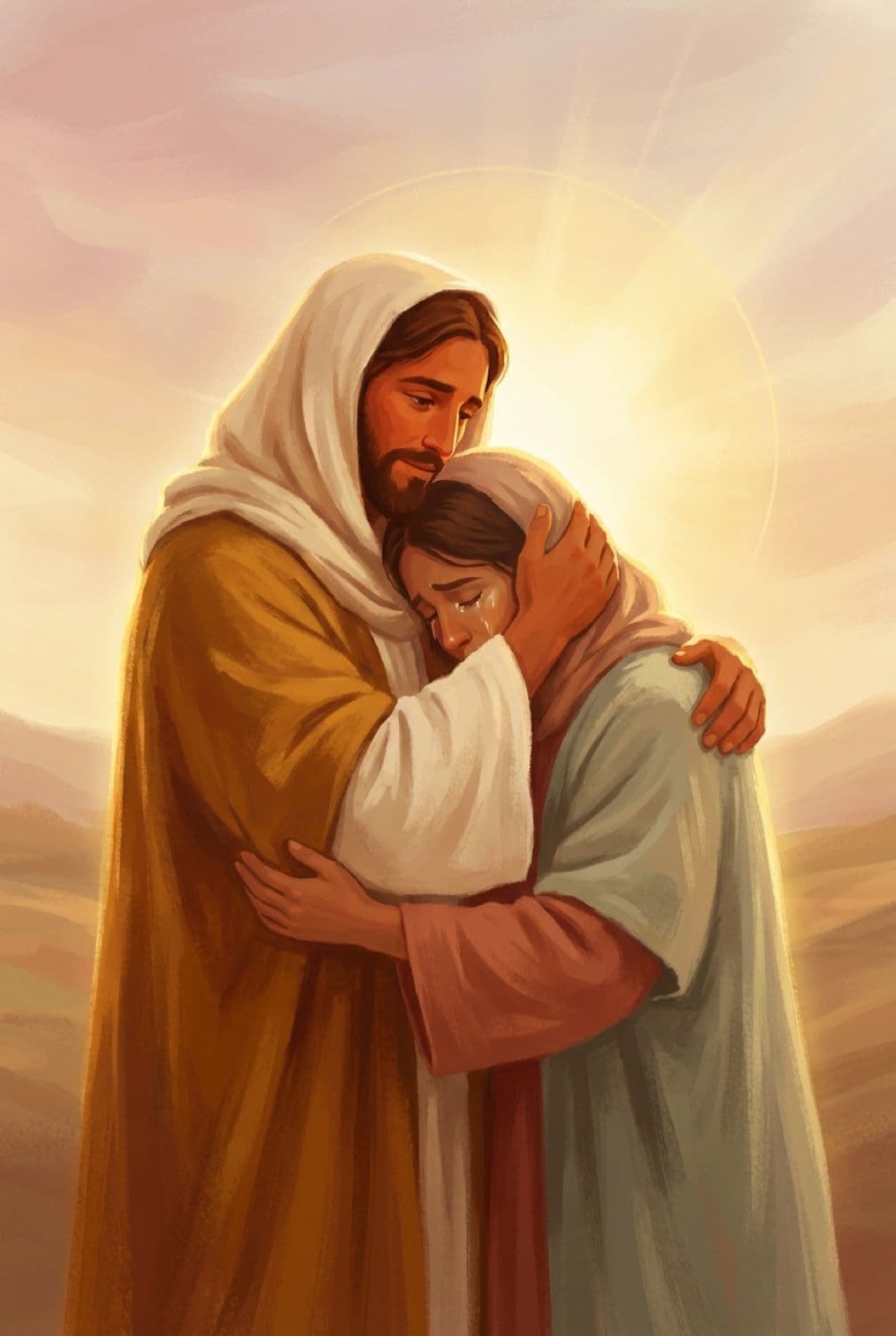
Lord Jesus Christ, I come to You in deep repentance. Not merely sorry for being caught, not merely sorry for the consequences — but genuinely sorry for offending You, my God, who is all good and deserving of all my love.
I have turned away from You. I have followed my own desires instead of Your will. I have chosen the temporary pleasures of sin over the eternal joy of walking with You. And I am ashamed.
But Your Word promises: "If my people, who are called by my name, will humble themselves and pray and seek my face and turn from their wicked ways, then I will hear from heaven, and I will forgive their sin and will heal their land." — 2 Chronicles 7:14
Lord, I humble myself before You now. I turn from my sin — not just in word, but in my heart. I do not want this sin anymore. I do not want the life I have been living apart from You.
I RENOUNCE:
Every sinful habit, every addiction, every compromise, every attachment that keeps me from wholehearted devotion to You. I lay it all at the foot of the Cross.
I RECEIVE:
Your mercy, which is new every morning. Your grace, which is sufficient for me. Your love, which pursues me even in my rebellion.
Set my feet on solid ground. Put a new song in my mouth. Make me new from the inside out. I want to walk with You again, Lord. Lead me home.
Through the intercession of the Blessed Virgin Mary, Mother of Mercy, I place my trust in Your infinite compassion. Amen.
Go deeper
Short prayers of repentance
1 min readRepentance often begins with a sentence, not a speech.
Repentance often begins with a sentence, not a speech. Each of these comes from Scripture or from the Church’s oldest prayers, and each has been enough for someone to come home.
God, be merciful to me, a sinner!
Lord Jesus Christ, Son of God, have mercy on me, a sinner.
Create in me a clean heart, O God. Renew a right spirit within me.
Lord, remember me when you come into your Kingdom.
Lord, have mercy. Christ, have mercy. Lord, have mercy.
The first is the tax collector in the Temple (Luke 18:13). The second is the Jesus Prayer, the great prayer of repentance of the Eastern churches, Orthodox and Catholic alike. The third is David’s, from Psalm 51. The fourth is the good thief on the cross, who had nothing left to offer but a request, and was told: “today you will be with me in Paradise.” The last is the Kyrie, said at the start of almost every Mass.
A prayer of repentance and forgiveness
2 min readA fuller prayer of repentance does three things: it names the sin honestly, it asks forgiveness without bargaining, and it promises, with God’s help, to change.
A fuller prayer of repentance does three things: it names the sin honestly, it asks forgiveness without bargaining, and it promises, with God’s help, to change. It does not need to be eloquent. “I acknowledged my sin to you. I didn’t hide my iniquity. I said, I will confess my transgressions to the LORD, and you forgave the iniquity of my sin.” (Psalm 32:5).
Father of mercy,
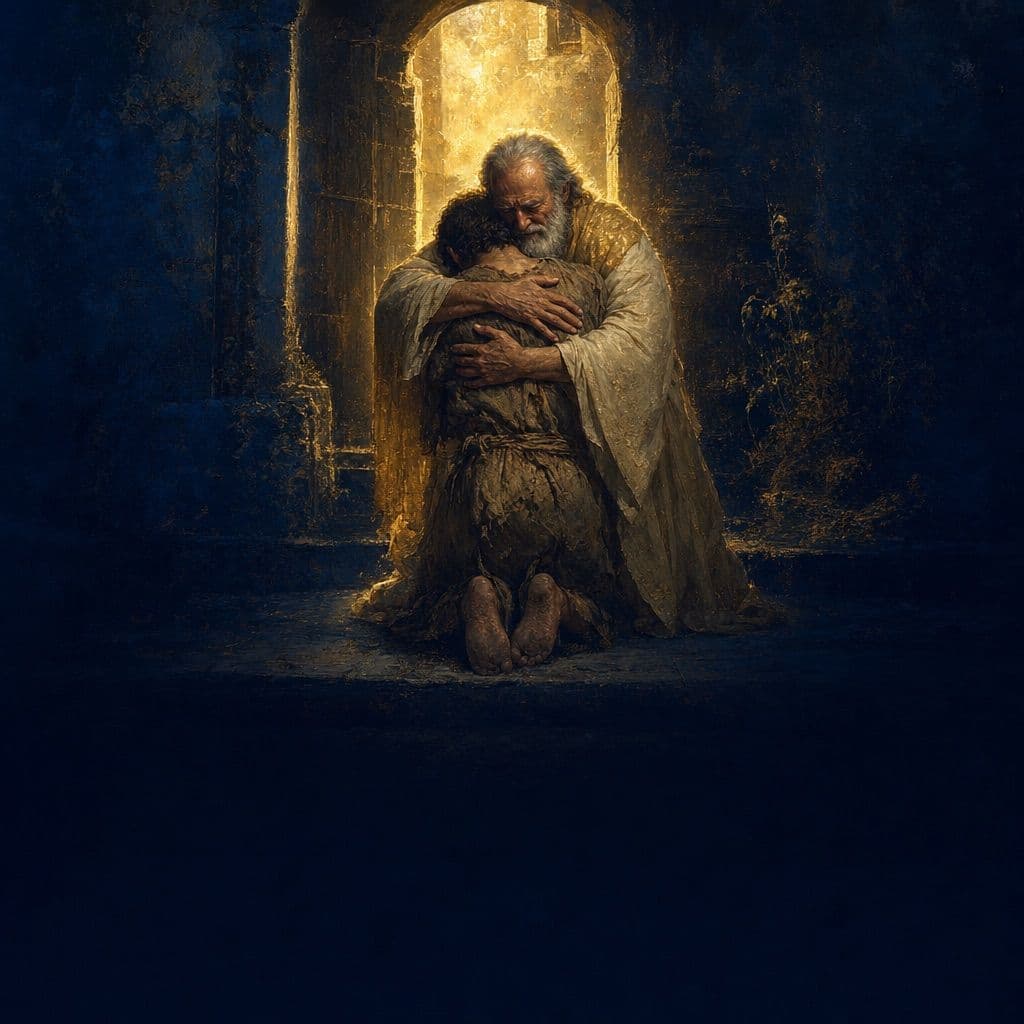
I come back to you, like the son who left home.
I have sinned against heaven and against you.
This is what I have done: (name it, plainly).
I am sorry.
Not only because I am ashamed, or afraid of what it has cost,
but because I have turned away from you,
who have never stopped loving me.
I do not deserve to be called your child.
Forgive me, and take me back.
Wash me clean, give me a new heart,
and give me the strength not to return to what I have left.
Where I have hurt others, show me how to make it right.
Through Jesus Christ, who died for my sins and rose for my life.
Amen.
If what you need is to forgive someone else, or to accept God’s forgiveness for yourself, there are prayers for that on the prayer for forgiveness.
Prayers of repentance in the Bible
2 min readPeople ask who prayed a prayer of repentance in the Bible.
People ask who prayed a prayer of repentance in the Bible. Many did, and their prayers are still the ones the Church uses.
- David, after the prophet Nathan confronted him over Bathsheba and Uriah: “I have sinned against the LORD.” And Nathan’s reply came at once: “The LORD also has put away your sin.” (2 Samuel 12:13). Tradition places Psalm 51 in the same moment.
- The prodigal son, rehearsing his speech on the way home: “Father, I have sinned against heaven and in your sight.” His father did not let him finish. “But while he was still far off, his father saw him and was moved with compassion, and ran, fell on his neck, and kissed him.” (Luke 15:18–20).
- The tax collector, standing at the back of the Temple, beating his breast: “God, be merciful to me, a sinner!” Jesus said he went home justified (Luke 18:9–14).
- St. Peter, who denied Christ three times: “The Lord turned and looked at Peter. … He went out, and wept bitterly.” (Luke 22:61–62). After the Resurrection, Christ asked him three times whether he loved him, and gave him his flock (John 21:15–17). Repentance undid the denial one question at a time.
- The good thief, crucified beside Jesus: “Lord, remember me when you come into your Kingdom.” (Luke 23:42).
- Daniel, confessing the sins of his whole people in exile: “we have sinned, and have dealt perversely, and have done wickedly, and have rebelled, even turning aside from your precepts and from your ordinances.” (Daniel 9:5).
- The prophet Joel, whose call the Church reads every Ash Wednesday: “Tear your heart and not your garments, and turn to the LORD, your God; for he is gracious and merciful, slow to anger, and abundant in loving kindness” (Joel 2:13).
The narrated prayer above quotes 2 Chronicles 7:14, God’s answer to Solomon at the dedication of the Temple. It was spoken to a whole people, and its promise is the same one every prayer of repentance rests on: God hears the humble who turn back to him.
David’s prayer of repentance: Psalm 51
2 min readPsalm 51, the Miserere, is the Church’s greatest prayer of repentance.
Psalm 51, the Miserere, is the Church’s greatest prayer of repentance. It is prayed every Friday in the Liturgy of the Hours and at the start of Lent. Its opening verses are a whole examination of conscience in themselves:
Have mercy on me, God, according to your loving kindness. According to the multitude of your tender mercies, blot out my transgressions. Wash me thoroughly from my iniquity. Cleanse me from my sin. For I know my transgressions. My sin is constantly before me. Against you, and you only, I have sinned, and done that which is evil in your sight.
Create in me a clean heart, O God. Renew a right spirit within me. Don’t throw me from your presence, and don’t take your Holy Spirit from me. Restore to me the joy of your salvation. Uphold me with a willing spirit.
The sacrifices of God are a broken spirit. O God, you will not despise a broken and contrite heart.
The whole psalm, with its history and a guide to praying it, is on Psalm 51. Its last line is the key to every prayer of repentance: God does not want a sacrifice to pay him off. He wants the heart.
What repentance is
2 min readJesus began his preaching with one word: “Repent, and believe in the Good News.”
Jesus began his preaching with one word: “Repent, and believe in the Good News.” (Mark 1:15). The Greek word, metanoia, means a change of mind, a turning around. The Catechism describes it this way: “Interior repentance is a radical reorientation of our whole life, a return, a conversion to God with all our heart, an end of sin, a turning away from evil,” and “it entails the desire and resolution to change one’s life, with hope in God’s mercy and trust in the help of his grace” (CCC 1431).
Three things follow from that.
- It is interior first. Jesus’ call “does not aim first at outward works,” but “at the conversion of the heart, interior conversion” (CCC 1430). Without it, outward penance is empty; with it, penance follows naturally.
- It is God’s work in us. “The human heart is heavy and hardened. God must give man a new heart” (CCC 1432). St. Paul says it is God’s goodness, not his threats, that “leads you to repentance” (Romans 2:4).
- It is never finished. The Catechism calls it “an uninterrupted task for the whole Church,” which is “at once holy and always in need of purification” (CCC 1428). Repentance is not a single event in a Christian life. It is how a Christian life moves.
St. Paul also distinguishes two kinds of sorrow: “For godly sorrow produces repentance leading to salvation, which brings no regret. But the sorrow of the world produces death.” (2 Corinthians 7:10). Godly sorrow turns toward God and gets up. Worldly sorrow turns in on itself and stays down.
The Act of Contrition: perfect and imperfect contrition
2 min readThe Catholic prayer of repentance, said in confession and traditionally every night, is the Act of Contrition.
The Catholic prayer of repentance, said in confession and traditionally every night, is the Act of Contrition. This is the traditional form most English-speaking Catholics learned:
O my God, I am heartily sorry for having offended Thee,
and I detest all my sins because of Thy just punishments,
but most of all because they offend Thee, my God,
who art all good and deserving of all my love.
I firmly resolve, with the help of Thy grace,
to sin no more and to avoid the near occasions of sin. Amen.
The Catechism defines contrition as “sorrow of the soul and detestation for the sin committed, together with the resolution not to sin again,” and says it “occupies first place” among the penitent’s acts (CCC 1451). It then distinguishes two kinds, which is exactly the movement the prayer makes from “Thy just punishments” to “most of all because they offend Thee.”
Perfect contrition “arises from a love by which God is loved above all else.” It “remits venial sins; it also obtains forgiveness of mortal sins if it includes the firm resolution to have recourse to sacramental confession as soon as possible” (CCC 1452).
Imperfect contrition, or attrition, “is also a gift of God, a prompting of the Holy Spirit,” born of “the consideration of sin’s ugliness or the fear of eternal damnation.” By itself it “cannot obtain the forgiveness of grave sins, but it disposes one to obtain forgiveness in the sacrament of Penance” (CCC 1453).
So fear of hell is not a bad place to start; the Church calls it a gift. It is simply not the place to stay. Every form of the Act of Contrition, the modern one from the Rite of Penance and the short ones included, is side by side on the Act of Contrition page.
What to do after a prayer of repentance
2 min readA prayer of repentance is the beginning of something, not the end.
A prayer of repentance is the beginning of something, not the end. What usually comes next:
- Go to confession. For a Catholic, repentance for serious sin is completed in the sacrament of Penance, where Christ forgives through the priest. The Catechism notes that confessing, “even from a simply human point of view, frees us and facilitates our reconciliation with others” (CCC 1455). If it has been years, you are exactly who the sacrament is for; how to go to confession walks through every step, including what to say if you have forgotten how.
- Examine your conscience first. The Catechism asks that confession be prepared by “an examination of conscience made in the light of the Word of God” (CCC 1454). There is a guided one in the examination of conscience.
- Repair what you can. “One must do what is possible in order to repair the harm (e.g., return stolen goods, restore the reputation of someone slandered, pay compensation for injuries)” (CCC 1459). Apologize to the person you hurt, if it is safe and wise to do so.
- Change the circumstances. The Act of Contrition promises to “avoid the near occasions of sin.” Delete the app, end the arrangement, stop going to that place, tell a friend.
- Accept the forgiveness. Do not keep confessing what has already been forgiven. “Though your sins are as scarlet, they shall be as white as snow.” (Isaiah 1:18).
And rejoice, because heaven does: “there will be more joy in heaven over one sinner who repents” (Luke 15:7).
A prayer for repentance of lust and for purity
2 min readMany people searching for a prayer of repentance are struggling with lust or pornography, often for years, often in secret, and often with the sense that they have repented of the same thing so many times it no longer counts.
Many people searching for a prayer of repentance are struggling with lust or pornography, often for years, often in secret, and often with the sense that they have repented of the same thing so many times it no longer counts. It counts. Every return is a real return. Christ promised the vision of God to the pure of heart (Matthew 5:8), and purity is something he gives, not only something we achieve.
Lord Jesus, I have fallen again, and I am ashamed.
You know my weakness better than I do,
and you have not given up on me.
Forgive me.
Create in me a clean heart, O God. Renew a right spirit within me.
Guard my eyes and my imagination.
Show me what I am really hungry for, beneath this,
and fill that hunger with what is good.
Give me the humility to ask for help,
and the courage to go to confession again, as many times as it takes.
Mary, Mother most pure, pray for me.
Amen.
If it has become compulsive, it is worth treating as what it may be, an addiction, with the practical help that implies: accountability, filters, a confessor who knows the pattern, and often a counselor. There are prayers and next steps for that on healing from addiction.
When guilt feels too heavy to carry
2 min readThere is a difference between repentance and despair, and Scripture shows it in two apostles on the same night.
There is a difference between repentance and despair, and Scripture shows it in two apostles on the same night. Both betrayed Christ. Peter wept and came back; Judas could not believe he could be forgiven. The Catechism names despair as a sin precisely because it is “contrary to God’s goodness” and “to his mercy” (CCC 2091): no sin is bigger than God’s willingness to forgive it.
Some people find they cannot stop confessing the same sins, cannot believe they are forgiven, or are tormented by fear that they have sinned when they have not. That can be scrupulosity, which is a real and treatable condition; tell your confessor, and a doctor if it does not ease. And if guilt or shame has become so heavy that you are thinking of harming yourself or ending your life, please reach out now:
Lord, I cannot believe you could forgive me.
But you forgave Peter, who denied you,
and the thief who had nothing to offer,
and the son who wasted everything.
I choose to believe your word over my feelings.
Lift this weight from me.
Send me someone to talk to, and give me the courage to tell them.
Amen.
“The LORD is near to those who have a broken heart, and saves those who have a crushed spirit.” (Psalm 34:18).
The “sinner’s prayer” and Catholic repentance
1 min readMany of the prayers of repentance you will find online are versions of the “sinner’s prayer” from evangelical Protestant preaching: a single prayer, said once, asking Jesus into your heart.
Many of the prayers of repentance you will find online are versions of the “sinner’s prayer” from evangelical Protestant preaching: a single prayer, said once, asking Jesus into your heart. Catholics share its heart, turning to Christ in faith and sorrow, and anyone may pray it sincerely. But Catholics understand repentance differently in two ways. First, the first great turning to God is Baptism, and for a Christian who has fallen away, the ordinary way home is the sacrament of Confession, not a formula. Second, repentance is not a single moment but, in the Catechism’s words, an “uninterrupted task” (CCC 1428): Catholics repent every night in the examination of conscience, at the start of every Mass, and in confession for as long as they live.
For a prayer of turning to Christ, and what the Church teaches about salvation, see the prayer for salvation. For the Church’s season of repentance, see Lent.
Questions
What is the prayer of repentance?
Any prayer in which a person admits their sin to God, is sorry for it, asks forgiveness and resolves to change. There is no single required text. The Bible’s shortest is the tax collector’s: “God, be merciful to me, a sinner!” The Catholic prayer of repentance used in confession is the Act of Contrition.
What is a short prayer of repentance?
“Lord Jesus Christ, Son of God, have mercy on me, a sinner.” Or Psalm 51:10: “Create in me a clean heart, O God. Renew a right spirit within me.” Or the good thief’s, from the cross: “Lord, remember me when you come into your Kingdom.”
Who prayed a prayer of repentance in the Bible?
David after his sin with Bathsheba (2 Samuel 12:13 and Psalm 51); the prodigal son (Luke 15:18–21); the tax collector in the Temple (Luke 18:13); St. Peter after denying Christ (Luke 22:62; John 21:15–17); the good thief (Luke 23:42); Daniel for his people (Daniel 9); and the whole city of Nineveh at the preaching of Jonah.
What is David’s prayer of repentance?
Psalm 51, the Miserere, which tradition places after the prophet Nathan confronted David over Bathsheba and Uriah. It begins “Have mercy on me, God, according to your loving kindness” and asks God to “Create in me a clean heart, O God.” The Church prays it every Friday.
How do you pray a prayer of repentance?
Name the sin plainly, without excuses; tell God you are sorry, ideally because it offends him and not only because of the consequences; ask his forgiveness; and resolve, with his help, to change and to avoid what leads you into it. For a Catholic, serious sin is then brought to confession.
What should I do after a prayer of repentance?
Go to confession, having examined your conscience; repair any harm you can (CCC 1459); change the circumstances that led you into sin; and accept that you are forgiven. Do not keep confessing sins that have already been absolved.
What is the difference between perfect and imperfect contrition?
Perfect contrition is sorrow that “arises from a love by which God is loved above all else”; with the resolution to confess as soon as possible, it obtains forgiveness even of mortal sins (CCC 1452). Imperfect contrition arises from the ugliness of sin or fear of punishment; it is also a gift of God and disposes one to forgiveness in confession (CCC 1453).
Is repentance the same as the sinner’s prayer?
Not quite. Catholics share the sinner’s prayer’s turning to Christ in faith and sorrow, but see repentance as lifelong, an “uninterrupted task” (CCC 1428), lived in Baptism, the examination of conscience, the Mass and the sacrament of Confession, rather than a single prayer said once.
Guided narration · How it’s made
Upcoming · Sep 29
Sts. Michael, Gabriel and RaphaelSee the full liturgical calendar — every feast this year, and an embed for your parish site.